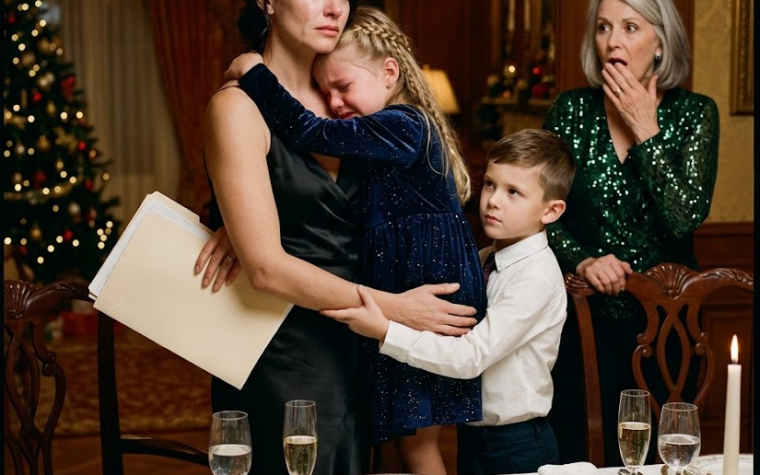
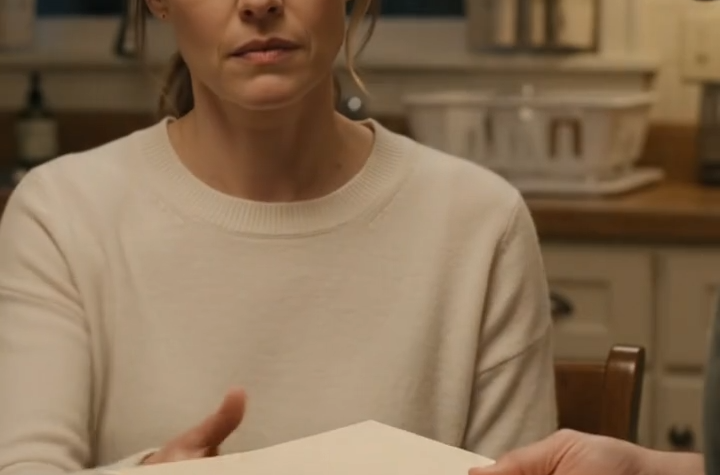
I pulled the clean chair away from the table and placed it beside mine.
Nobody moved.
For years, the end of dinner had followed the same choreography.
Chairs scraped back.
Glasses were abandoned wherever hands happened to release them.
Someone carried a plate toward the kitchen if it was convenient.
Someone else disappeared into another room.
Voices resumed somewhere beyond the dining area while water began running at the sink.
The water was always mine.
That night, it didn’t run.
I rested one hand on the back of the chair I had pulled out and looked at the people standing in the doorway.
“Sit down,” I said.
The words were quiet enough that nobody could accuse me of shouting.
That seemed to make them more uncomfortable.
One of them glanced at the table and then back at me.
“Why?”
I looked at the dirty plates between us.
“Because I want you to see what I see.”
They exchanged a look.
It was the kind of look people give each other when they think someone is making too much of something small.
That almost made me laugh.
Small.
A plate was small.
A fork was small.
A glass with a ring of water beneath it was small.
But repetition could turn small things into a life.
They sat reluctantly.
I didn’t begin with accusations.
I didn’t want a dramatic scene.
I didn’t want apologies dragged out of anyone because they were trapped at a table.
I wanted them to notice.
So I asked one question.
“Who cooked tonight?”
Nobody answered immediately.
Finally someone said, “You did.”
“Who served the food?”
“You.”
“Who made sure everyone had what they needed?”
Another pause.
“You.”
I nodded toward the dishes.
“And when everyone finished, what happened?”
This time nobody answered.
From where I sat, I could see the evidence clearly: plates with scraps left behind, serving dishes no one had carried away, the pan still on the stove, glasses scattered around the table, crumbs pressed into the cloth.
Nothing about it was catastrophic.
That was precisely the problem.
It was ordinary.
Ordinary enough that nobody had questioned why one person always stayed behind.
“I wasn’t trying to be rude,” someone said at last.
I believed them.
That made the conversation harder, not easier.
Cruelty would have been simpler.
Cruelty has sharp edges.
You can point at it.
Habit is softer.
Habit settles into a house quietly.