I felt something cold move through me.
Oliver was seven years old.
That afternoon, he had wrapped his arm around his crying sister and told her their grandparents would come back soon.
He had done what frightened children do when adults fail them: he had tried to become older than he was.
Now my mother was using his courage as an excuse for her decision.
“Do not call my son responsible for your abandonment,” I said.
My father’s head lifted.
“Whitney, nobody abandoned anyone.”
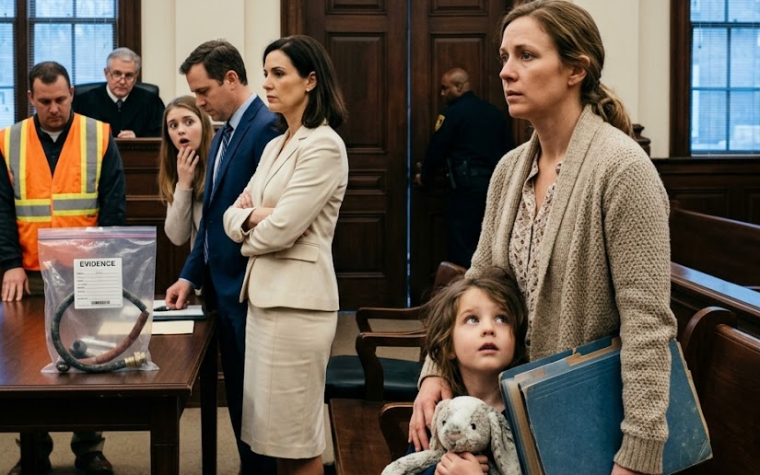
The lawyer opened Margaret’s written statement.
“Mrs.
Doyle observed both children alone on the front steps.
Sophie was crying.
Oliver told her that you had left and said you would return soon.
Mrs.
Doyle attempted to contact Whitney fourteen times before bringing the children into her home.”
My mother waved one hand.
“Margaret exaggerates.
She always watches that street like she’s running a neighborhood patrol.”
“She provided a signed account,” the lawyer replied.
“She also recorded the times of her calls.”
My mother’s mouth tightened.
Amber looked toward the door.
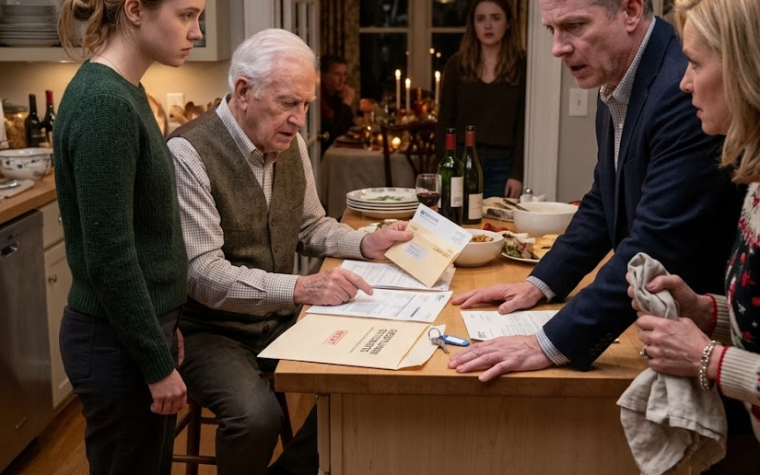
The lawyer placed my hospital discharge papers beside the statement.
“Whitney was under anesthesia when you left.
She was physically incapable of returning home, contacting the children, or arranging alternate care.
Her medical records establish that timeline.”
“We knew Margaret was next door,” my father said.
“Did Margaret agree to supervise the children?”
He did not answer.
“Did you tell her you were leaving?”
His eyes dropped again.
“Did you transfer responsibility to her or any other adult?”
Silence.
My mother pushed the papers away.
“This is a family matter.
You are turning one mistake into some legal spectacle because you’ve always been jealous of your sister.”
Amber’s expression changed.
Not because the accusation shocked her, but because she recognized it.
My mother had used that explanation for years.
Whenever I objected to being ignored, I was jealous.
Whenever I asked for equal effort, I was keeping score.
Whenever Amber received support while I managed alone, I was supposed to call the imbalance love.
The lawyer did not react.
“Why did you leave?” she asked.
“Amber had an appointment.”
“What kind of appointment?”
Amber spoke quickly.
“It was important.”
“Medical?”
“No.”
“Employment-related?”
“No.”
“An emergency?”
My sister looked at me as if I had arranged the question to humiliate her.
“It was a salon appointment,” she said.
My mother immediately leaned forward.