Somewhere down the street, a dog barked once and stopped.
Nothing dramatic happened when they left.
No thunder.
No applause.
No sudden feeling of triumph.
I simply stood outside my own house holding three keys.
The locksmith returned the following morning after the moving van left.
He changed the exterior locks while I carried my diplomas back into the office.
When he finished, he handed me two new keys.
“Anyone else need copies?” he asked.
I looked through the open doorway at the quiet hall.
“No.”
The first week was harder than I expected.
I kept hearing imaginary footsteps above me.
I bought too many groceries because my hands still calculated for four people.
At night, I almost turned down the thermostat before remembering no one would complain.
Guilt arrived in familiar voices.
Family takes care of family.
Your sister’s happiest day.
After everything we did for you.
I answered each voice with something concrete.
The mortgage statement.
The empty guest room.
The key in my hand.
My parents moved from the hotel into a small apartment three weeks later.
Dad took temporary consulting work.
Mom began tracking expenses in a notebook and discovered that electricity, groceries, and insurance were not abstract things that appeared because someone loved you.
Madison moved in with Tyler.
The expensive venue was canceled.
Several months later, they married in a modest private room at a restaurant.
I learned about it from a photograph sent by a cousin.
I had not been invited.
The absence hurt, but not in the way they expected.
I did not miss the wedding they had tried to purchase with my surrender.
I mourned the sister I had spent years hoping Madison might become.
Some relatives believed my parents’ version of events.
Others apologized after reading the documents.
A few admitted they had assumed my parents owned the house because of the way Dad spoke about it.
I stopped trying to manage every opinion.
Proof had corrected the record.
I did not need to conduct a trial in every living room.
I moved back into the master bedroom.
Madison had left faint scratches inside the closet and a perfume bottle beneath the bed.
I repaired the wood, donated the bottle, and placed my reading chair beside the window again.
In the office, I rehung my diplomas.
In the kitchen, I returned the cups and plates to the cabinets where I wanted them.
The changes were ordinary.
That was what made them powerful.
One Sunday evening, several weeks after the locks changed, I roasted a small chicken and set one place at the dining table.
The chandelier cast warm light over the good plates.
The porch flag moved beyond the window.
A lawn mower hummed somewhere down the street.
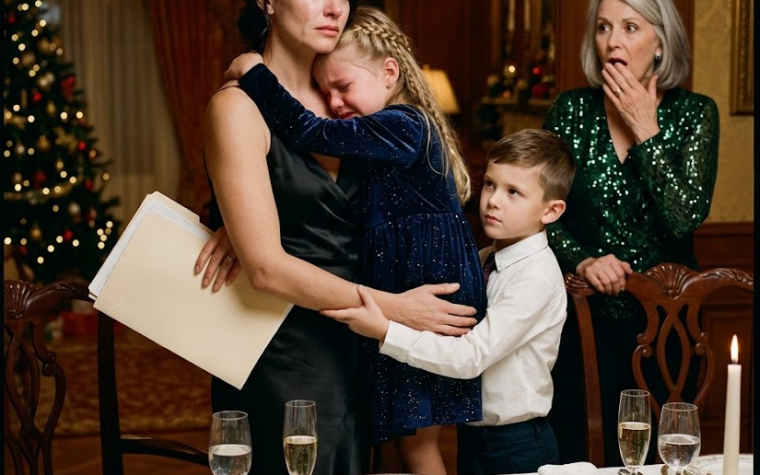
The room looked almost exactly as it had on the night my family demanded twenty-eight thousand dollars.
But I no longer felt like a visitor.
I ate slowly.
When I finished, I carried my plate into the kitchen, turned off the chandelier, and walked upstairs to my bedroom.