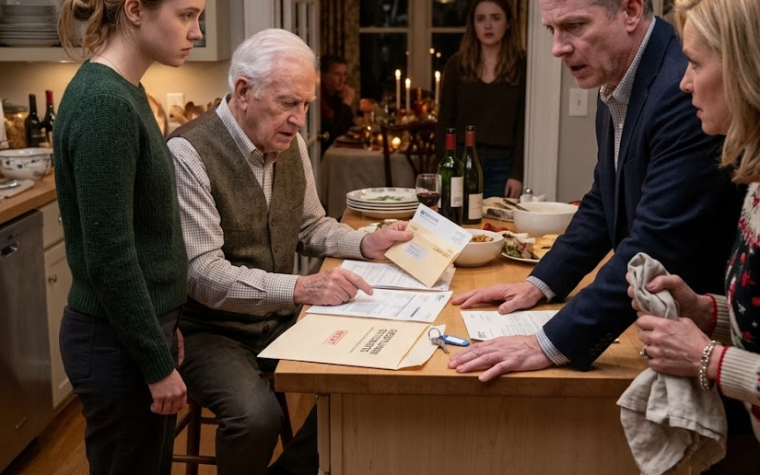
No guessing.
No rewriting history.”
Robert would have approved of that sentence.
Over the next several weeks, the consequences were ordinary, which made them more real.
Tom and Jessica cut expenses and moved automatic payments to their own checking account.
The vacation plans disappeared.
He picked up extra weekend hours at the dealership when commissions slowed.
Lisa reworked her budget and stopped treating a bad month as proof she needed rescuing.
She called me twice to ask for advice without asking for money, something she had not done in years.
Michael sold equipment he had bought for the app project and began separating what he wanted to build from what he could actually afford.
He sent me the first written repayment proposal of the three.
It was not large.
But it was written.
I kept it.
Tom took longer.
For nearly a month, our conversations were careful and awkward.
He was polite but distant.
Then one Saturday morning he came over alone carrying two cups of coffee.
He set one on the kitchen table and looked toward the pantry door where the pencil marks from his childhood still climbed upward year by year.
“I was a jerk,” he said.
I waited.
He pulled out a chair.
“I think I got used to you fixing everything.”
“That is partly my responsibility.”
He looked surprised.
“I taught all three of you that if the pressure got high enough, I would make it disappear.”
He stared into his coffee.
“And then I acted like it was mine.”
“Yes.”
He nodded.
That was the apology I had needed.
Not because it erased anything.
Because it named it correctly.
Months later, I returned to the bank for an ordinary appointment.
The same representative recognized me.
“How are you doing, Mrs.
Whitfield?”
I knew she meant more than my accounts.
“Better,” I said.
The three convenience accounts were gone.
My retirement money was reorganized into accounts with no family debit cards attached.
The blue folder stayed in my desk at home, beside Robert’s old calculator.
I still helped my children sometimes.
That surprised them at first.
But help had changed shape.
I watched my granddaughter when Tom and Jessica had a scheduling problem.
I brought Lisa soup when she got sick.
I listened to Michael explain a smaller business idea and asked questions instead of reaching for my checkbook.
And occasionally, when something genuinely serious happened, I gave money because I chose to.
The difference was simple.
They asked.
I decided.
No one assumed.
The first Sunday all three returned for dinner after the accounts were closed, I made pot roast again.
For a moment, standing at the stove, I worried the meal would feel like a reenactment of the worst evening we had shared.
Instead, Tom arrived carrying dessert.