The first ship photograph still hung behind the desk.
On the anniversary of her death, I finally opened the bottom drawer.
Inside was one more envelope with my name on it.
It contained no evidence, no passwords, and no instructions.
Only a note.
You were never the weakest person in the room.
You were simply the only one who did not need everyone else to know you were strong.
I sat in her chair and cried for the first time since the courtroom.
Not because Victor had lost.
Not because Caleb was gone.
Not because a judge who mocked me had been exposed.
I cried because Mom had known exactly what they would call me: poor, unstable, emotional, unqualified.
She had known I would hear my own family turn my restraint into evidence against me.
And she had known I would stand anyway.
I did not move into the mansion after the case ended.
I kept my studio apartment until the lease expired.
The black tote bag remained on the hook beside my door, its handle permanently creased from the weight of the sealed folder.
People later called the courtroom confrontation brilliant.
It was not brilliance.
It was preparation, preserved evidence, and the final lesson my mother taught me.
Powerful people become most careless when they believe humiliation has made you helpless.
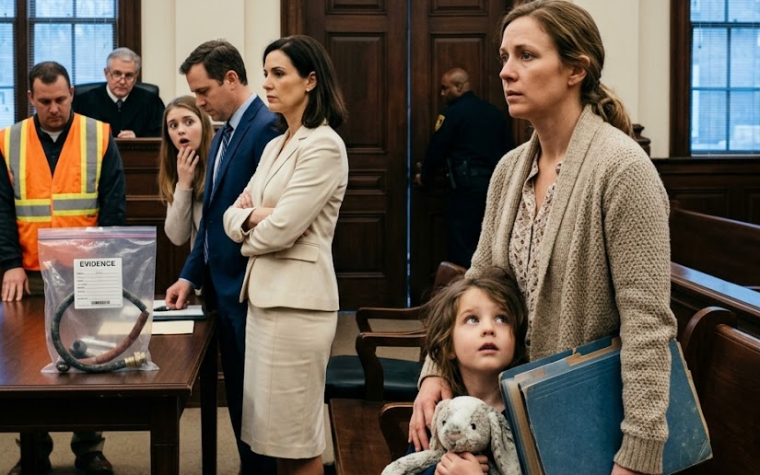
At 10:14 that morning, my father believed my life had been reduced to a psychiatric report, an empty chair beside me, and a cheap bag at my feet.
By five o’clock, the report had become evidence against him, the empty chair no longer mattered, and the bag had carried everything Mom needed me to find.
They had laughed because I arrived alone.
They did not understand that I had walked into court with my mother’s voice, her ownership, and the truth beside me.