That word stayed with me.
Capable.
It sounded complimentary until I considered what it had excused.
Because I was capable, nobody helped.
Because I was organized, Chris did not take out the trash.
Because I was generous, Ashley took what she wanted.
Because I was dependable, my mother believed she could volunteer my home, labor, and money without asking.
They had turned my competence into consent.
I replied to my mother the next morning.
Being capable does not make me responsible for everyone.
I said no, and you planned to force me anyway.
I will not discuss Christmas until you can acknowledge that.
She did not answer.
For the next several days, photographs appeared in the family chat from her house.
The rooms were crowded.
The folding chairs did not match.
Chris complained that the children were sleeping badly.
Ashley wrote that there was only one bathroom upstairs.
Nobody seemed to notice they were describing conditions they had expected me to manage cheerfully.
On Christmas Eve, my mother sent one final attempt.
There is still time for you and Michael to come.
We can put all of this behind us.
I read the message twice.
There was no apology.
No acknowledgment.
No question about our plans.
Just another invitation for me to erase what had happened so everyone else could feel comfortable.
I wrote back:
We already have plans.
Merry Christmas.
Our plans were small.
Michael and I made dinner together in the rental’s narrow kitchen.
He chopped vegetables while I prepared a chicken small enough to fit in the oven without rearranging three shelves.
We bought one pie instead of baking four.
There were no breakfast casseroles for the next morning, no labeled containers, no stacks of towels, and no luggage blocking the hallway.
At nine o’clock, we washed the dishes together.
It took seven minutes.
I stood there afterward with my hands in warm water, waiting for the sadness to come.
Some of it did.
I missed the version of Christmas I had spent years trying to create.
I missed the idea that all my work would eventually be recognized as love and returned in the same form.
But I did not miss the real thing.
I did not miss waking before everyone else to cook.
I did not miss hearing cabinets open while I was still in bed.
I did not miss my mother correcting me in my own kitchen or Chris laughing when I asked for help.
I especially did not miss becoming invisible in a house full of people.
Michael poured the last of the cinnamon coffee into two mugs.
“Do you regret it?” he asked.
I thought about the empty rooms we had packed, the closing papers, the furious calls, and the stranger’s car in the driveway.
“I regret waiting so long to believe them,” I said.
“Believe what?”
“That they heard me every time.
They just expected me to surrender.”
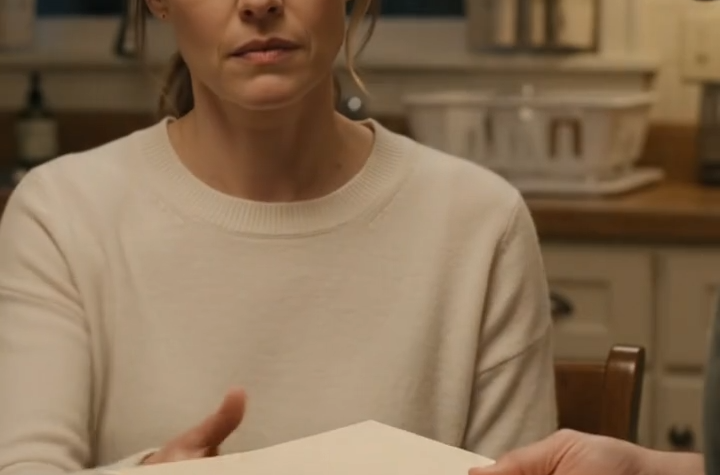
In January, my mother finally asked to meet.
Michael came with me, not because I needed permission to speak, but because he had watched the pattern for years and I no longer wanted private conversations to be rewritten later.
My mother arrived with a list of grievances.