Several officials who had accepted her gifts became subjects of separate investigations.
Elena received a formal declaration of innocence and a public apology from the prosecutor’s office.
No apology could return the six months taken from her, but Mara helped her file claims against those responsible for the negligent investigation.
More important to Elena, the guardianship document Gideon prepared was honored.
Clara came home with her.
Blackwood Manor no longer felt like a palace.
It felt like a room where too many voices still echoed.
Clara could not sleep there, and Elena had no desire to remain surrounded by the place where Gideon died and she was framed.
They moved into a smaller house near Clara’s school.
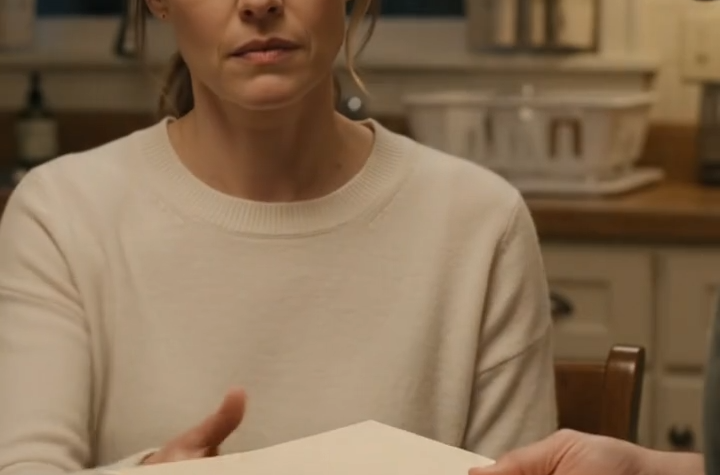
It had creaking floors, a narrow garden, and a kitchen table scarred by years of use.
There were no marble halls or private gates.
On the first night, rain struck the windows.
Clara woke from a nightmare and found Elena sitting beside her bed before she could call out.
For months, Clara had believed courage meant running into a courtroom without being afraid.
Elena taught her otherwise.
“Courage is not the absence of fear,” she said.
“It is telling the truth while your fear is still in the room.”
Clara kept the pink toy phone, but she never watched the recording again.
Investigators returned the device after the appeals ended.
The casing was scratched, and the battery barely held a charge.
Elena placed it inside a small wooden box with Gideon’s last letter to Clara.
In that letter, written days before his death, Gideon apologized for working too much and for failing to see how dangerous his marriage had become.
He told Clara that wealth could build walls, but it could not tell her whom to trust.
For that, she should watch how people treated those who had less power than they did.
Clara understood why Elena had always felt safe.
Elena had loved her when nobody was watching.
Seraphina had performed love only when everyone was.
Years later, people still remembered the barefoot girl who interrupted a verdict.
They remembered the toy phone, the frozen image, and the widow lunging toward the screen.
Clara remembered something quieter.
She remembered Elena’s wrists after the handcuffs came off.
She remembered how the entire courtroom had believed polished lies because the truth arrived wearing a prison uniform.
And she remembered the moment Elena knelt, opened her arms, and made the noise of the courtroom disappear.
The recording exposed a killer.
But Clara’s decision to press play did something more.
It returned a name to an innocent woman, a voice to a frightened child, and dignity to the family Seraphina had tried to destroy.