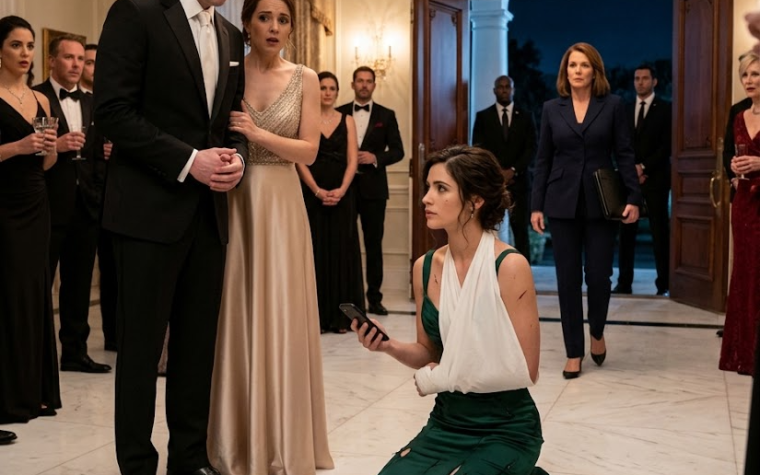
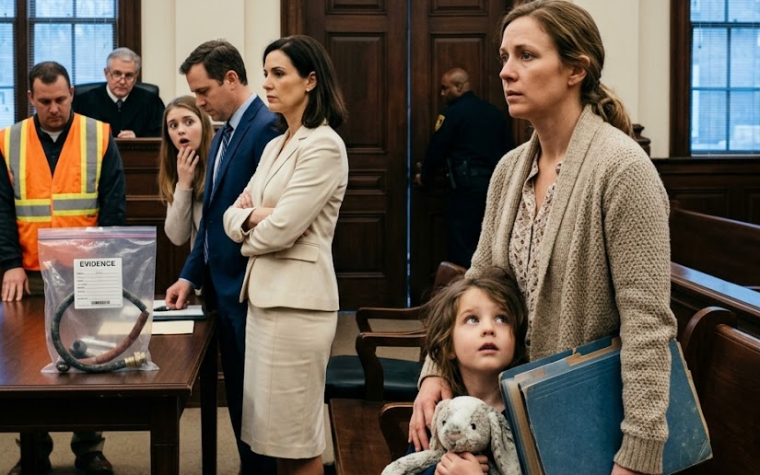
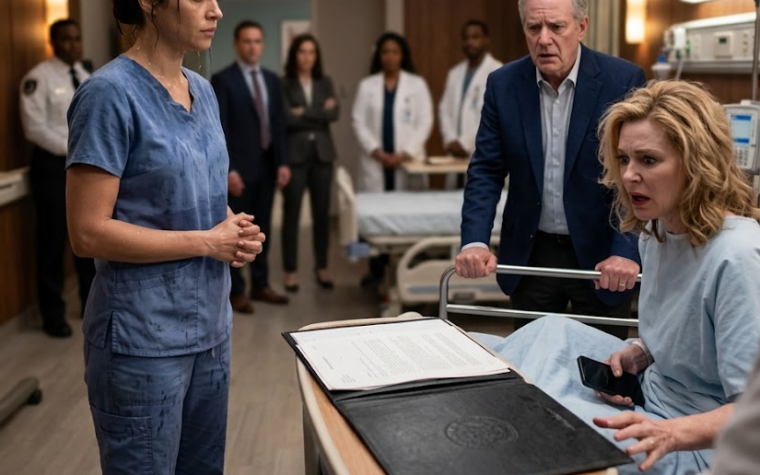
Some avoided my eyes.
One older man touched my shoulder before leaving and said Walter had always been difficult to fool.
When only Walter’s daughter, the lawyer, and I remained, the lawyer handed me a small brass key.
“Walter’s final personal instruction was that you open the bottom drawer of his writing desk.”
Two days later, Walter’s daughter met me at his house.
The rooms felt painfully quiet without him.
His gray cardigan still hung over the back of the chair.
The record player stood open, one of his favorite albums waiting beneath the needle.
For a moment, I expected to hear him ask why I was late.
The key opened a narrow drawer in his study.
Inside rested another envelope, a photograph of Walter in uniform, and the wooden chess piece he used to hold whenever he was thinking.
The letter was written in large, uneven handwriting.
“My dear girl,” it began.
He wrote that he had known the truth before I crossed his doorway.
He wrote that during the first month, I sounded like someone walking across thin ice.
By the third month, I argued when he skipped lunch.
By the second year, I entered without knocking because he kept forgetting to unlock the door.
“That is how I knew the arrangement had become something else,” he wrote.
“A hired visitor waits to be invited inside.
Family complains about the lock.”
I laughed through my tears.
Walter told me not to let shame rewrite the years we had shared.
He said the beginning had been dishonest, but the ending had not.
He asked me to finish college, help Noah without making him feel like a burden, and forgive my mother for every bill she had hidden beneath the others.
His final sentence was underlined twice.
“You did not steal a granddaughter’s place.
You made a lonely man feel that he still had one.”
I accepted the trust.
The first payment went directly to the hospital account my mother had been afraid to open.
When she learned what Walter had done, she sat at the same kitchen table where I had once found her holding that envelope.
This time, she cried openly.
Noah’s illness did not disappear.
There were still appointments, difficult weeks, and treatments that left him exhausted.
But the fear surrounding every medical decision changed.
My mother no longer had to calculate which bill could remain unpaid so he could receive the next procedure.
I returned to college full-time and kept working, though fewer shifts were necessary.
The trust paid the school directly, exactly as Walter had arranged.
When I graduated, Walter’s daughter attended with my mother and Noah.
She brought the photograph of Walter in uniform and placed it beside us for one picture.
His absence was still an absence.
Money had not repaired that.
But his final decision had changed what his death left behind.
He had taken the part of our relationship that began as a transaction and turned it into protection.
Not a prize.
Not revenge against the family who had disappointed him.
Protection, carefully structured so no one could mistake his purpose.
I still visit Walter on Sundays.
There is no chair to angle toward the sunlight now, no blanket to straighten, and no clock I can pretend not to check.
I bring fresh flowers, sit beside his grave, and tell him about Noah’s latest appointment, my work, and the ordinary problems he would have called proof that life was continuing.
Then, before I leave, I touch the cold stone and say the same words that once felt false and heavy in my mouth.
“Hi, Grandpa.”
Now they are simply true.