“That part may have been intentional.”
She stared at me.
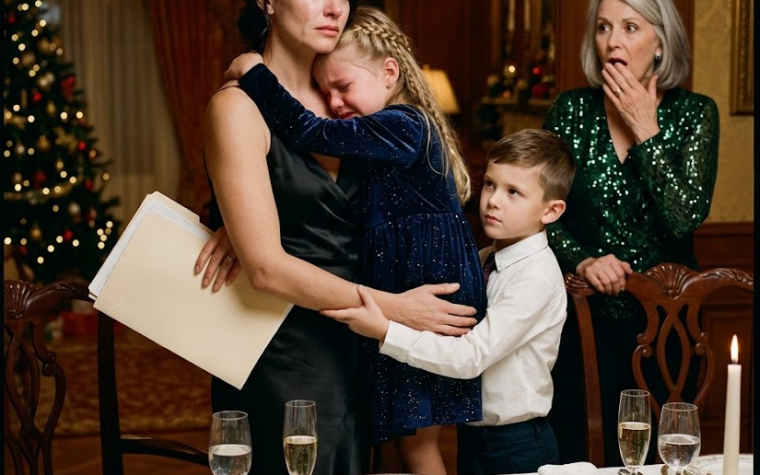
Then she laughed once, but tears came with it.
She put her arms around me.
I held her tightly.
“I’m proud of you,” I whispered.
She pulled back.
“I’m proud of you too.”
That was harder to hear than the general’s salute had been.
Mercer found us near the edge of the field.
Without the microphone and distance of the platform, he looked older than I remembered.
Not weaker.
Just marked by years the way we all are eventually.
He carried the envelope.
“I have one more thing,” he said.
I groaned.
Emma smiled.
“Good.”
Mercer opened the envelope again, but this time he removed a small photograph.
My breath caught.
Five men stood beside a vehicle, dirty, exhausted, grinning at the camera.
Luis was in the center.
The leather band was visible on his wrist.
On the back, in his handwriting, were six words.
Get everybody home.
Then go live.
I read them twice.
Mercer said nothing.
Neither did Emma.
For twenty-three years I had obeyed only the first half.
I had carried the band because Luis told me to keep it until everybody got home.
Some part of me had interpreted his death as proof that the promise could never end.
But the photograph told a different story.
He had never asked me to spend the rest of my life standing guard over grief.
He had told me to live.
I looked at Mercer.
“Where did you get this?”
“His daughter.”
My head came up.
He nodded.
“She has copies of his effects.
I contacted her during the review.
She asked me to give that to you if I ever found you.”
I stared at the photograph.
“How is she?”
“Teacher.
Two children.
Doing well.”
Something inside my chest loosened in a place I had forgotten was tight.
Emma leaned her shoulder against mine.
“You should call her.”
“I should.”
Mercer handed me the envelope.
“The medal is yours whenever you are willing to receive it.”
I looked at him.
“No stadium.”