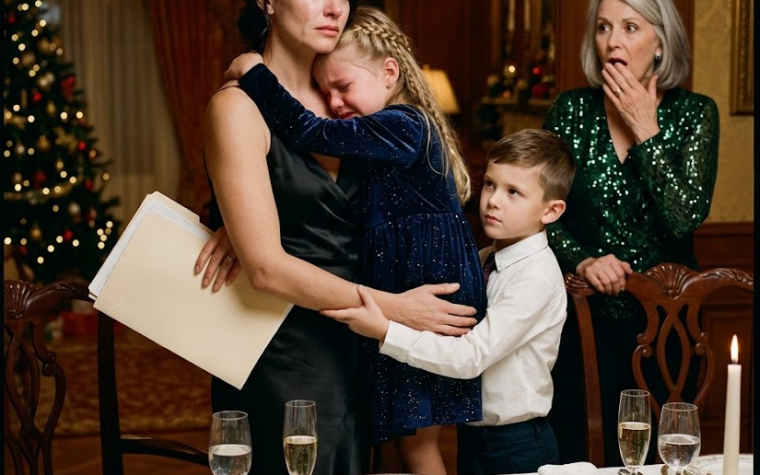
One of the officers had collected it after Ethan formally revoked her permission to enter our home.
The key looked ordinary beneath the hospital light.
That disturbed me most.
There was nothing evil about the metal.
The danger had been the person we trusted to use it.
Harper remained under observation through the morning.
Her seizure stopped, and the doctors told us her condition had stabilized, but they could not promise that recovery would be simple.
She would need follow-up scans, neurological monitoring, and careful observation at home.
I listened to every instruction twice.
Ethan wrote everything down because my hands would not stop shaking.
Later, a detective interviewed us separately.
I described the thud, Harper’s cry, Janice’s position beside the crib, and every word she had said before the ambulance arrived.
I admitted that Janice had watched Harper three weeks earlier when the bruise appeared.
Saying it aloud made guilt rise inside me like acid.
The detective stopped me.
“You relied on an adult who gave you a plausible explanation,” she said.
“The responsibility belongs to the person who caused the injury and concealed it.”
I wanted to believe her.
It took longer than that morning.
Ethan’s interview lasted nearly an hour.
When he returned, his face was swollen from crying.
“I told them everything,” he said.
“Even the things she said about me?”
“Especially those.”
He sat beside Harper’s bed and covered his face.
“I kept asking you to give her another chance.”
I did not comfort him immediately.
That may sound cruel, but there are moments when comfort becomes another way of helping someone avoid the truth.
“You did,” I said.
“I thought she was difficult.
I did not think she was dangerous.”
“I told you I was afraid to leave Harper alone with her.”
“I know.”
“You said I was being unfair.”
“I know.”
His voice broke on the second admission.
I watched him sit with it.
Then I said, “You do not get to make your guilt the biggest emergency in this room.
Harper is the emergency.”
He nodded.
“You’re right.”
That answer mattered more than an apology would have.
The investigation did not end at the hospital.
Specialists reviewed Harper’s images and concluded that one injury was recent while another showed signs of healing from an earlier event.
The timing of the older injury was consistent with the afternoon Janice had watched her alone.
The medical findings could not describe every movement inside the nursery, but they destroyed Janice’s story that Harper had merely startled herself.
Her own words did the rest.
She had admitted entering the nursery to correct a crying baby.
She had said she barely touched her.
Then she claimed she touched only the crib.
Then she said she tapped the mattress.
Then she said Harper twisted.
Then she admitted losing her grip.
Finally, she said she had put Harper down hard—but not hard enough to cause an injury.
Each new version appeared only after the previous one became impossible.
Weeks later, through her attorney, Janice stopped calling the incident a misunderstanding.