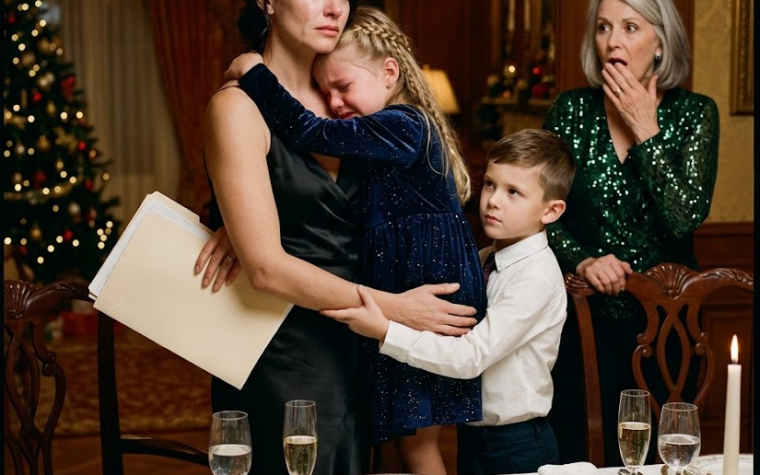
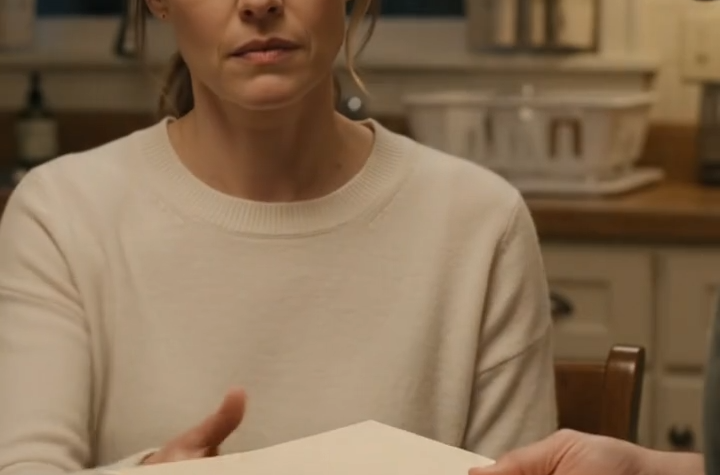
“So was I,” she said quietly.
Over the next several days, Rachel followed through on the information the officers had given her.
She provided copies of the video and messages and sought a temporary protective order while the incident was reviewed.
Nathan went with her once when she asked him to provide a statement about the camera footage.
He did not sit beside her like a rescuer.
He sat behind her as a witness.
When questions were directed at Rachel, she answered them herself.
When questions were directed at Nathan, he described only what he had seen and what his camera had recorded.
The order was granted.
The larger case would take longer.
Investigations, hearings, and arguments did not move with the speed of a ten-minute board decision.
But the immediate consequence was simple: Emma’s father was ordered to stay away from Rachel’s home and to follow the legal process rather than appear at the door whenever anger told him he could.
For Rachel, that piece of paper did not erase fear.
It gave fear a boundary.
Nathan learned something too.
For years, his house had been the place where he slept between flights and meetings.
He knew the quarterly revenue of divisions on three continents but had never learned the name of the woman living thirty yards from his kitchen.
After that night, he noticed things.
He noticed Rachel leaving before sunrise in one work uniform and returning in another.
He noticed Emma drawing with chalk near the porch steps.
He noticed which neighbors waved and which still preferred curtains.
He did not try to reorganize Rachel’s life.
He fixed a loose porch rail when she asked.
He showed her how to download clips from the security camera if she ever needed them again.
He gave Emma a flashlight after she announced that his house had “the best good lights.”
Rachel accepted some help and refused other offers.
Nathan learned to respect both answers.
Weeks later, he came home before dark for once.
Emma was sitting on the repaired front step while Rachel carried groceries inside.
The new door closed behind her with a solid click.
Emma immediately looked toward Nathan.
“Did you hear that?”
Nathan stopped beside his driveway.
“Hear what?”
She pointed proudly at the house.
“Our door.”
Rachel came back onto the porch.
Emma jumped up and tested the handle with both hands.
“It closes now.”
Nathan smiled.
“Yes, it does.”
Emma looked up at her mother.
“And Mommy isn’t scared of it anymore.”
Rachel’s expression changed.
Not because the sentence was completely true.
Some nights she still checked the lock twice.
A car slowing near the curb could still tighten her shoulders.
The legal process was not magically over, and evidence could not undo what Emma had heard behind that broken door.
But Rachel no longer kept a chair beneath the handle.
She no longer turned threatening messages facedown and pretended they had not arrived.
She had copies.
She had witnesses.
She had a repaired frame.
Most importantly, she had made the decisions herself.
Rachel stepped beside Emma and rested one hand on her daughter’s shoulder.
“That night,” she told Nathan, “I thought the worst thing was that she left the house alone.”