“Because two nurses asked questions last year.
Neither works here anymore.”
Emily had not pressed her.
Instead, she preserved copies of the records she was authorized to review as part of patient care and submitted a formal internal report through the hospital’s compliance process.
The next day, Richard Caldwell had the report on his desk.
That alone bothered her.
A routine discrepancy report should have been reviewed first by clinical management and compliance staff.
The CEO had intercepted it before anyone had interviewed Emily.
Richard had smiled when she entered his office.
“You’ve been here sixteen days.
Do you understand how damaging accusations like these can be?”
“They’re not accusations.”
“Withdraw the report.”
“No.”
Then came the first unmistakable threat.
“People who mistake suspicion for expertise don’t usually last long here.”
Emily had looked at the framed hospital award behind his desk.
“Is that a termination notice?”
Richard’s smile thinned.
“It’s advice.”
“Then I decline it.”
Her employee badge stopped working that evening.
By morning, access had mysteriously returned.
George’s records had also changed.
The entries Emily questioned were cleaner.
Times had shifted.
Notes had vanished.
Someone wanted the original discrepancies to become impossible to prove.
But Emily had already created a documented chain of what she had reported and when.
She also discovered something else.
Her complaint had never been entered into the normal compliance queue.
It had been diverted.
That was the moment she stopped believing Richard was merely a defensive executive protecting the hospital’s reputation.
He was protecting himself.
Dr.
Hensley confirmed part of it without meaning to.
He caught Emily outside George’s room and looked at the folder under her arm.
“Administration wants to see you.”
“About what?”
“You already know.”
Emily studied him.
“Do you?”
Hensley looked toward the nurses’ station.
“I know people have been told not to discuss old chart corrections with you.”
“Who told them?”
He did not answer.
But he did not need to.
Emily asked one more question.
“Would you say that again if someone else were listening?”
Hensley gave her a long look.
“Depends who’s listening.”
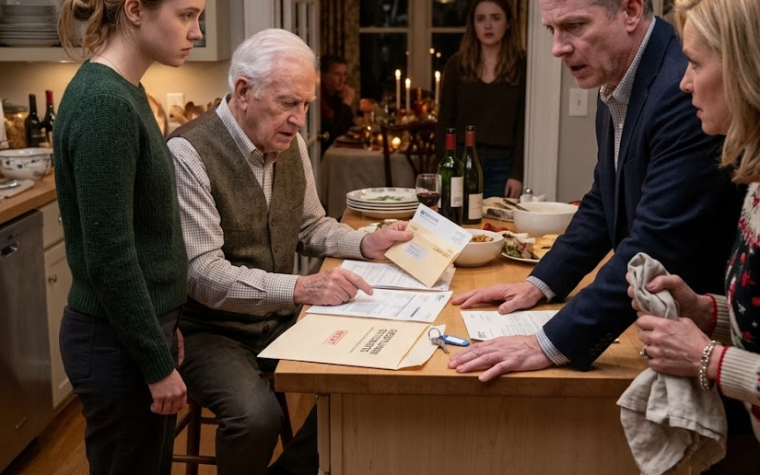
That afternoon, George’s wife arrived carrying a paper insurance statement she did not understand.
George complained that the hospital had charged for things he did not remember receiving.
Emily did not interpret the bill for him; billing was outside her role.
But the complaint matched what she had already seen in the clinical record.
The pattern was no longer only about sloppy charting.