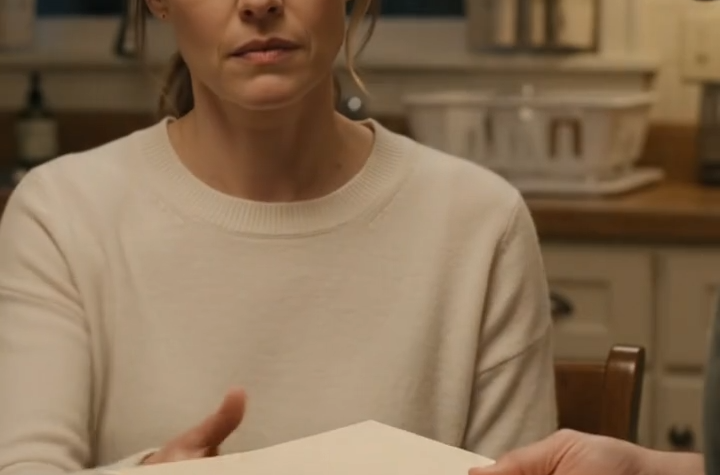
“What if I make you late?”
“Then I will be late.”
She did not smile.
Trust does not return because an adult finally says the right words.
But her shoulders lowered slightly, and for the first time since I found her, she let me hold her.
I filed for divorce while Valerie was still in the hospital.
My attorney also obtained orders preventing Sophia from contacting us directly.
I stepped away from daily company operations and told the board only what they needed to know: my daughter had been harmed in my home, a criminal investigation was underway, and I would be unavailable.
No one resigned.
The company did not collapse.
The disaster Sophia had used to frighten Valerie existed only as a story designed to keep a child silent.
The criminal case lasted months.
Sophia’s lawyers challenged the search, the medical findings, and Valerie’s ability to remember events accurately.
Each challenge forced my daughter’s experience into documents, interviews, and hearings that no child should have to endure.
The specialists protected her from facing Sophia directly whenever the law allowed.
Valerie’s earlier statements, medical evidence, school observations, photographs, and the items recovered from the house supported one another.
Sophia eventually accepted responsibility through a plea rather than risk a trial on every charge.
The court imposed a custodial sentence, mandatory treatment, and a long-term protective order forbidding contact with Valerie.
The judge rejected the argument that the abuse was simply excessive discipline.
“Discipline is not terror,” the judge said.
“Caregiving is not ownership, and grief is not permission to erase a child’s mother.”
Sophia looked toward me as she was led away.
Months earlier, that look would have demanded that I rescue her from embarrassment.
This time, I turned toward Valerie’s advocate instead.
Recovery was quieter than the case.
There were no dramatic speeches that fixed everything.
Valerie slept with her door open for nearly a year.
She hid food in her desk because part of her still expected dinner to be taken away.
She asked permission before drinking anything unfamiliar.
Wooden rulers disappeared from our house, and her school used soft measuring tapes around her until she said she was ready.
I changed too, though change was not a payment that erased my failure.
I stopped treating time with Valerie as something left over after work.
I attended therapy with her when invited and waited outside when I was not.
I learned not to demand answers when she became quiet.
I learned that asking whether she was fine was useless if she believed fine was the only safe response.
We created a place for Elena in our home again.
The silver frame returned to Valerie’s bedside.
We repaired the torn drawings with transparent tape.
On Sundays, Valerie chose one memory of her mother to tell me.
Sometimes it was important.
Sometimes it was only that Elena cut sandwiches diagonally or sang the wrong words to songs.
Every memory was allowed.
Near the end of the school year, Valerie brought home a math test with a large red B at the top.
She stood in the kitchen holding it with both hands.
Her face had gone pale.
“I missed three,” she whispered.
For one terrible second, I saw how carefully she was watching me.
I took the paper, looked at the problems, and placed it on the counter.
“Do you understand the ones you missed?”
“Not all of them.”
“Then we’ll learn them.”
“That’s all?”
“That’s all.”
She waited.
“No ruler?” she asked.
I knelt so we were eye to eye.