Deputies found the contractor at a motel outside Reno.
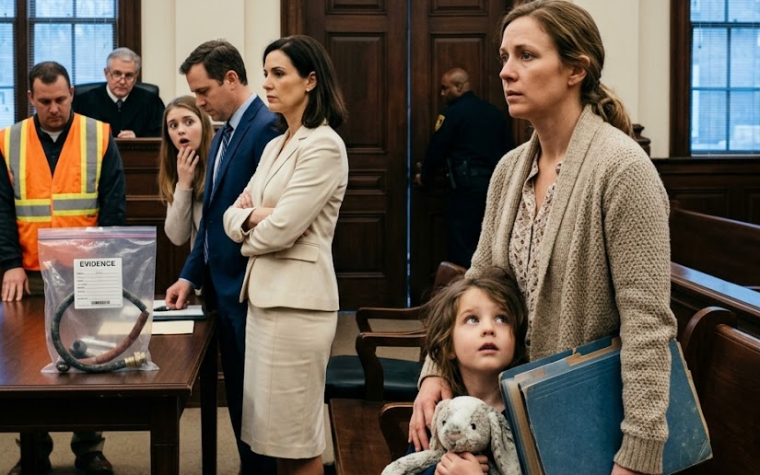
In his truck were cable cutters, fuel-resistant gloves, and the torque wrench visible in the camera image.
He initially claimed he had been sent to make the hangar safe.
Then investigators showed him the severed grounding strap.
Making the hangar safe did not require creating an ignition hazard.
He admitted that he had been instructed to ensure the silver helicopter could not be inspected.
He said the order came through a security manager and that he had been promised enough money to leave Nevada afterward.
The security manager denied everything until investigators recovered deleted messages from a company-issued tablet.
The messages never said to start a fire.
They used phrases like eliminate exposure, neutralize the airframe, and complete the work before outside inspection.
But one message was clear.
M.V.
wants this closed before Monday.
Merit said the initials did not refer to her.
At the second hearing, she took the witness stand voluntarily.
Her lawyers believed she could separate herself from the contractor and restore the company’s credibility.
She testified that she had learned about the hangar only after the auction photograph circulated online.
She denied knowing the helicopter had survived.
She called her father’s signature a reproduction and insisted the settlement had been a routine attempt to protect trade secrets.
My attorney handed her the original offer.
“Why did the agreement require my client to deny seeing identifying marks?”
“Standard confidentiality language.”
“Why did it require him to deny that anyone entered the property after the auction?”
“A broad release protects both parties.”
“Did you know the fence had been cut when you presented this agreement?”
“No.”
My attorney displayed a still photograph taken by the sheriff.
Merit’s black SUV was parked beside the cut section of fence.
She had walked past it on her way into the hangar.
Merit’s lawyer objected.
The judge overruled him.
My attorney placed the inspection card on the evidence table.
“Is Gideon Wickliffe your father?”
“Yes.”
“Did he use a signing machine for private aircraft inspections?”
“I would not know.”
A video deposition from the former storage supervisor began playing.
He described Gideon leaning against the silver helicopter’s open maintenance bay and signing the card by hand.
He remembered the moment because Gideon had joked that dead aircraft were cheaper to maintain than living ones.
Merit’s expression hardened.
Then the independent examiner’s report was admitted.
The silver helicopter’s hidden structural serial number matched the aircraft declared destroyed.
The burned wreck in the insurance photograph had a different skid attachment pattern, different rivet spacing, and components manufactured three years earlier.
The examiner had also recovered impressions from the missing logbook pages using non-destructive forensic imaging.
The removed entries documented preservation inspections performed months and years after the reported fire.
Several bore the initials of Wickliffe technicians.
One bore Gideon’s.
The courtroom became completely still.
Wickliffe’s ownership claim had trapped the company.
To recover the assets, it had to admit they belonged to Wickliffe.
But admitting ownership meant acknowledging that the company had hidden them from an insurer, creditors, regulators, and the bankruptcy court.
The judge froze all transfers connected to Silver Mesa and referred the record to federal investigators.
Wickliffe’s board placed Merit and two family-controlled executives on leave that afternoon.
The insurer filed a civil fraud action the following morning.
Aviation regulators opened an investigation into the false destruction report and the removal of maintenance records.
The contractor was charged with burglary and evidence tampering.