“From what?”
“From Clara.”
I stared at her.
That was the story she chose.
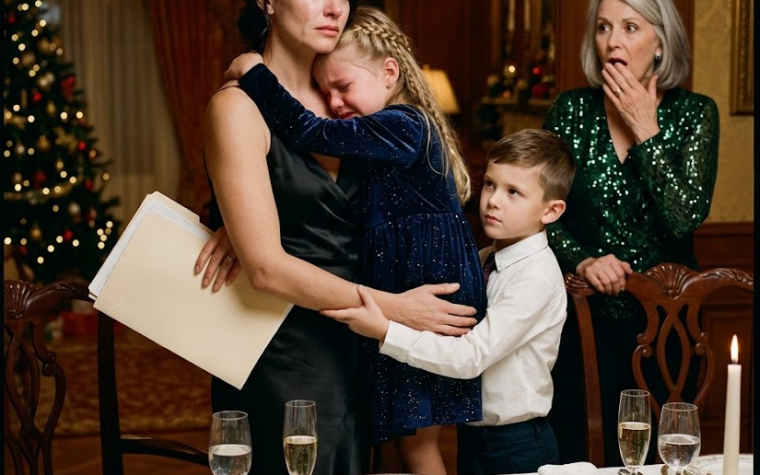
After five years of me feeding Mom, bathing her, driving her to doctors, paying her debts, sitting beside her hospital bed, and eventually holding her while she died, Rebecca decided I was the threat.
“You weren’t protecting Mom from me,” I said.
“You were trying to get control of the house before she changed her estate documents.”
“That’s a lie.”
“Then why did Mom file a report?”
“Because you made her.”
I shook my head.
“I didn’t even know about the notary visit when she made the report.”
That was the part Rebecca had never understood.
Mom had kept some things from me too.
Not because she distrusted me.
Because she was ashamed.
She had spent years defending Rebecca.
Every time my sister failed to visit, Mom invented a reason for her.
Rebecca was busy.
Rebecca had responsibilities.
Daniela needed her.
Traffic was bad.
Work was difficult.
Maybe next weekend.
Mom protected the daughter who barely called her because admitting the truth would have meant admitting how completely that daughter had learned to use her love.
The notary incident finally broke something.
According to Mom’s notebook, Rebecca had arrived unexpectedly one afternoon and told her there were papers that needed signing to “fix the loan problem.”
Mom, already using a wheelchair, agreed to go with her.
At the notary office, a clerk began asking questions Mom had not expected.
Was she selling voluntarily?
Did she understand the transfer?
Had she received independent legal advice?
Mom panicked.
She refused to sign.
The transaction stopped.
Rebecca became furious.
A stranger outside the office noticed the argument and later provided the photograph after Mom returned with help to ask questions about what had happened.
The following day, Mom contacted the police.
The report did not produce an immediate prosecution because no completed transfer had taken place and the disputed documents had not been executed.
But it created a record.
More importantly, it frightened Mom enough to contact an estate lawyer of her own.
That lawyer arranged independent meetings.
He documented her mental capacity.
A physician evaluated her.
Two witnesses observed her signing.
Video recorded part of the process.
Six months before her death, Mom signed a new will.
The house went to me.
Rebecca received nothing from it.
The savings account was handled differently.
A portion was reserved for final expenses and outstanding medical costs.
What remained was left largely to me as reimbursement—not full reimbursement, not even close—for debts and documented expenses I had personally covered during Mom’s care.
Several pieces of jewelry were left directly to Daniela.
That detail stunned her.
“She left me something?”
“Yes.”