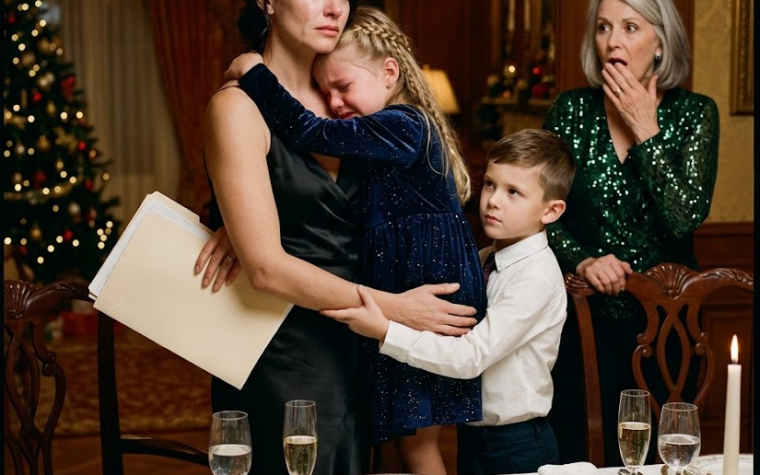
Then I remembered that I was no longer trapped inside their decisions.
Their unequal rules no longer controlled my bank account.
My father sold a collection of equipment he rarely used and canceled several expenses.
Brandon postponed the boat.
My mother stopped mentioning his savings as though they were sacred.
The house did not disappear.
No one became homeless.
The catastrophe my mother had placed on my shoulders turned out to be a problem three employed adults could solve once they stopped expecting the fourth person to solve it for them.
My father called me two weeks later.
He apologized again, this time without defending the decision.
“We knew you would pay,” he admitted.
“That was why we asked you instead of him.”
It hurt, but I appreciated the honesty.
“You did not ask,” I reminded him.
“You’re right.
We told you.”
My mother did not apologize.
She sent occasional messages about family loyalty and how difficult the month had been.
I answered only practical questions.
When she tried to turn the conversation into guilt, I stopped replying.
For the first time, silence protected me instead of punishing me.
I stayed in the modest room I had rented and began rebuilding the savings I should have had all along.
The space was smaller than my childhood bedroom, but everything inside it was mine.
No one entered without knocking.
No one compared my future to Brandon’s.
No one demanded proof that I deserved to be there.
Months later, I attended another family dinner at my aunt’s house.
My mother was polite but distant.
Brandon carried dishes to the table and looked more tired than he used to.
Paying rent had apparently introduced him to chores as well.
At one point, my aunt asked how my new place was going.
“Quiet,” I said.
“I like it.”
My mother looked down at her plate.
Brandon met my eyes.
“I’m sorry about that night,” he said.
“The smirking.
All of it.”
I nodded.
I was not ready to pretend everything was repaired, but I did not need to punish him to prove I had been hurt.
“Thank you for saying it.”
The conversation moved on.
I looked around the table and remembered the night I had stood in that same kind of silence while everyone watched my mother call me ungrateful.
Back then, I thought dignity would come from making them understand how much they had hurt me.
It did not.
Dignity came from understanding that I did not need their permission to leave.
I had spent months paying for a bedroom in a house where my value was measured by how much inconvenience I could absorb without complaining.
Walking out cost me my childhood home.
Staying would have cost me much more.