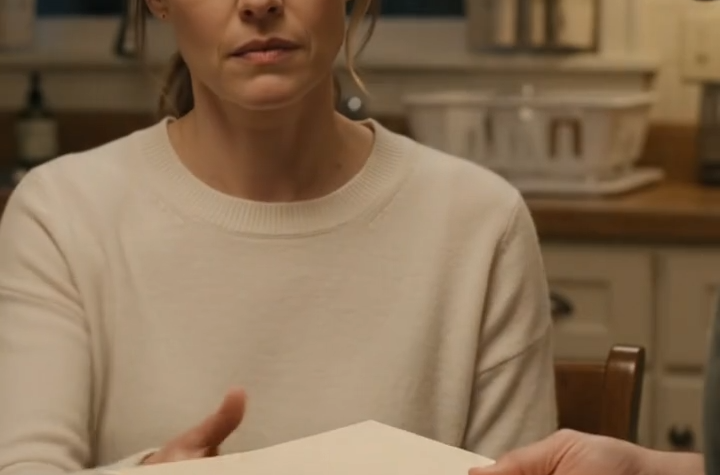
The folder opened with a dry crack that sounded too loud for the conference room.
Clara Mendoza stood beside the table with rain still trapped in the seams of her coat, though the storm had ended hours before.
She had slept for less than forty minutes.
She had not eaten.
Her hands should have been shaking.
They were not.
Across from her, Veronica Salvatierra stared at the first page in the folder as if it had become a weapon.
At the top was a simple diagram drawn in blue ink.
No decoration.
No big title.
Just the emergency encryption loop that made IrisLink work faster than any mobile banking security platform TechNova had ever promised investors.
Clara had drawn it three years earlier on a train ride home from her mother’s first hospital stay, using the back of an unpaid medical invoice because she had run out of notebook pages.
Veronica knew that page.
She had seen it once, tucked into Clara’s desk notebook beside the window.
Samuel Vale, the old man from the rain, touched the edge of the paper with two fingers.
The night before, those same fingers had trembled around a dead phone beneath a broken shop awning.
Now his nails were clean, his beard trimmed, his dark coat expensive without needing to announce itself.
The room had already recognized him.
A private buyer had been circling TechNova for weeks.
Nobody at Clara’s level had been told the name.
Executives had whispered only about Vale Capital, about a buyer with enough money to swallow TechNova whole and enough patience to examine every wire before signing.
Samuel Vale was that buyer.
Beside him stood Elena, the daughter he had called from the repaired phone.
She carried a leather briefcase and watched the room with the cold stillness of someone who had already read more than anyone wanted her to know.
Veronica recovered first.
She always did.
Her smile returned, smaller now, sharpened by effort.
—Mr.
Vale, I’m afraid there has been a misunderstanding.
Clara was upset yesterday.
She contributed to testing, yes, but she has always exaggerated her role.
Clara said nothing.
That silence irritated Veronica more than any accusation would have.
—Clara, tell them.
You were assigned support tasks.
Debugging.
Minor documentation.
You know how collaborative development works.
The investors looked from Veronica to Clara, waiting for the old version of her to appear.
The useful one.
The quiet one.
The woman who fixed servers at midnight, accepted blame before anyone assigned it, and apologized for standing in doorways.
Clara opened the second flap of the folder.
Samuel did not look surprised.
He had told her not to sign anything, and she had obeyed.
Not because he was rich.
Because for the first time in months, someone had looked at her work as if it could speak.
Inside the folder were printed access records she had saved before Veronica’s last sweep.
Not enough to win a fight by themselves.
Clara had known that.
TechNova’s internal system had been altered, dates shifted, backups cleaned.
Veronica had made sure any complaint would look emotional, not factual.
But thieves often understood locks better than traces.
Clara understood machines.
—I built IrisLink on my personal test environment before it touched TechNova’s servers, Clara said quietly.
The first prototype was called IrisGate.