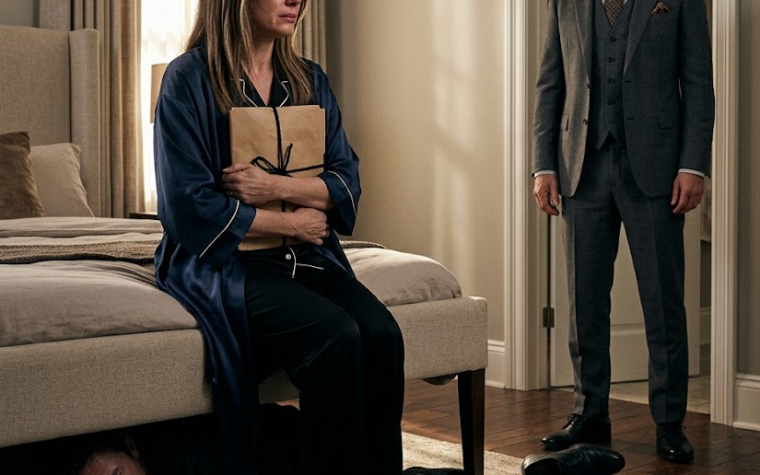
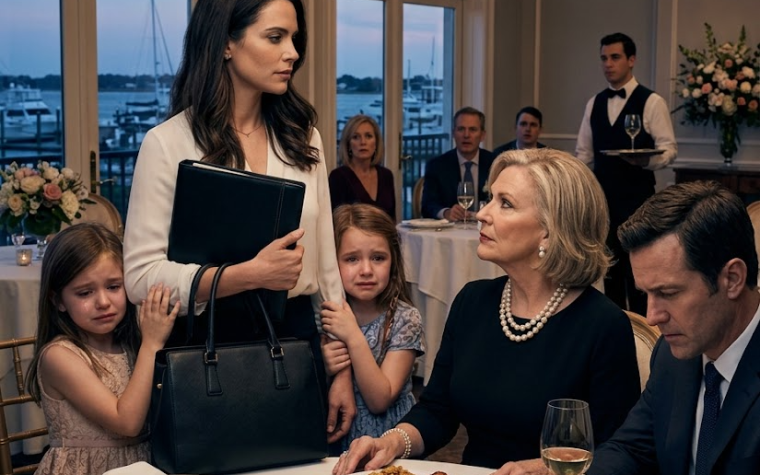
The divorce took nine months.
During that time, Claire expanded her freelance work into a steady consulting role.
The income was not glamorous, but it was hers.
She bought a secondhand dining table and let Sophie choose yellow curtains for her bedroom.
Melissa helped assemble shelves while Claire laughed for the first time in weeks after they installed one backward.
The house in Naperville was eventually sold.
Its equity was used to satisfy the mortgage and part of the debt Ethan had concealed.
The remaining property was divided through negotiation, with adjustments reflecting the documented marital funds spent on the apartment and gifts.
Ethan did not lose everything.
Claire had never sought that.
He kept his job, rented a smaller place, and maintained parenting time with Sophie.
But he lost the life built on the assumption that Claire would absorb every humiliation to preserve appearances.
Vanessa left before the divorce was final.
Without the dinners, apartment, and secrecy, their relationship became a series of arguments about money and blame.
She returned the bracelet only after her own attorney advised her that keeping disputed property could pull her deeper into the case.
Claire did not ask for it.
When the bracelet was placed on the conference-room table during settlement discussions, she looked at it once and told Marisa it could be sold with the other contested items.
“I do not want a souvenir,” she said.
The final judgment was entered on a rainy morning nearly one year after Ethan had questioned her coat in the kitchen.
Afterward, Claire collected Sophie from school.
They stopped at a small bakery and shared a slice of chocolate cake beside the window.
Sophie, now old enough to understand more than Claire wished she had to, asked, “Are you happy it is over?”
Claire considered the question.
“I am relieved the fighting is over.”
“Do you hate Dad?”
“No.”
Sophie watched her carefully.
Claire reached across the table and wiped a streak of frosting from her daughter’s thumb.
“I hated what happened.
But carrying hate would keep me living in it.”
That evening, Claire returned to her apartment and opened the small box where she kept important documents.
Inside was a copy of the handwritten note she had left beside her ring.
She read the final paragraph, the part Ethan had never mentioned during all his accusations.
I am not leaving because another person rescued me.
I am leaving because I finally believed the evidence of my own life.
I asked for honesty, and you gave me contempt.
I asked for partnership, and you made my dependence the punch line of your affair.
You were right that I did not know where to start.
So I learned.
Claire folded the copy and placed it back in the box.
Then she walked into the kitchen.
Sophie was doing homework at the secondhand dining table beneath the yellow glow of a lamp they had chosen together.
There were no marble counters, no designer pendant lights, and no carefully staged photographs waiting to be posted.
There was only a small, honest room.
Claire set down two mugs of cocoa and sat beside her daughter.
For months, Ethan had believed the empty half of the closet was the punishment.
It was not.
The empty closet was simply proof that Claire had stopped asking permission to exist outside the life he had designed for her.
Her real victory was quieter.
She had kept her dignity.
She had protected Sophie from becoming a weapon.
She had faced the financial truth without turning cruelty into cruelty of her own.
Most of all, she had learned that dependence was not the same as devotion, silence was not surrender, and leaving did not begin when the boxes were carried out.
It began the moment she heard him laugh and say she would never know where to start.
He had been wrong.
She started with one bank statement, one appointment, one private account, and one calm decision after another.