“Call them back,” she said, “or this breaks.”
Daniel looked at the phone, then at her.
“Break it.
The evidence is backed up.”
Her hand froze.
He had finally taken away the only power she understood: the power to make him afraid of losing something.
Vanessa lowered the phone but did not return it.
She backed toward the living room, collecting her coat with one hand and clutching her bag with the other.
Before she reached the front door, two patrol vehicles turned into the driveway.
The deputies separated everyone and spoke to us individually.
They did not stage a dramatic arrest at the dinner table.
Real investigations rarely deliver justice in one clean moment.
They documented the deed packet, the forged loan application, the messages, and the existing case number.
Daniel identified the phone as his and explained that Vanessa had taken it after he tried to contact me.
When a deputy asked whether he wanted her removed from the property, he said yes without looking at anyone for permission.
Vanessa claimed the documents were part of a misunderstanding between an engaged couple.
Daniel told them they were not engaged.
She claimed he had authorized her to manage his finances.
He produced a recent message in which he had explicitly refused to add her to his accounts.
She claimed the courthouse photograph was fabricated.
The civil complaint attached to it included a date of birth, former address, and signature matching information found in her handbag after investigators later obtained the proper warrant.
That afternoon, the deputies escorted her from the house because Daniel had withdrawn permission for her to remain.
The financial allegations required further investigation, but the immediate danger had ended.
For the first time since arriving, Daniel stood in a room without Vanessa touching him, answering for him, or watching his phone.
He did not look relieved.
He looked exhausted.
After the patrol cars left, Donna reheated the food.
Nobody had much appetite, but she needed something ordinary to do.
Carol cleaned gravy from the deed page without smearing the ink.
My brother replaced the turkey platter in the center of the table, though the turkey had gone cold.
Daniel sat beside me with both hands around the chipped mug.
“I should have told you sooner,” he said.
“You told me when you could.”
“I let her into everything.
My house.
My bank account.
My phone.”
“Trusting someone is not permission for them to steal from you.”
He stared into his coffee.
“I kept thinking I could fix it without anyone knowing.”
“That is what she needed you to think.”
His eyes filled, but he did not turn away.
“When she took the phone, I couldn’t think of anything except that stupid mug.”
“It wasn’t stupid.”
“I was twelve when we made that signal.”
“And it still worked.”
The investigation lasted months.
The bank froze the home-equity application before any money was released.
The county recorder rejected the deed transfer, and a forensic examiner concluded that Daniel’s signature had been copied from an older insurance document.
Investigators linked the name Mara Vale to two prior fraud complaints involving men whose finances had been combined, monitored, and drained after fast-moving relationships.
In both cases, the victims had been reluctant to speak because Vanessa had threatened public accusations and professional humiliation.
Daniel’s saved messages, the forged application, the false deed packet, and the recording on his phone provided a pattern that could not be dismissed as a private argument.
Vanessa continued denying everything until the digital records showed that the loan application had been submitted from her device while Daniel was at work.
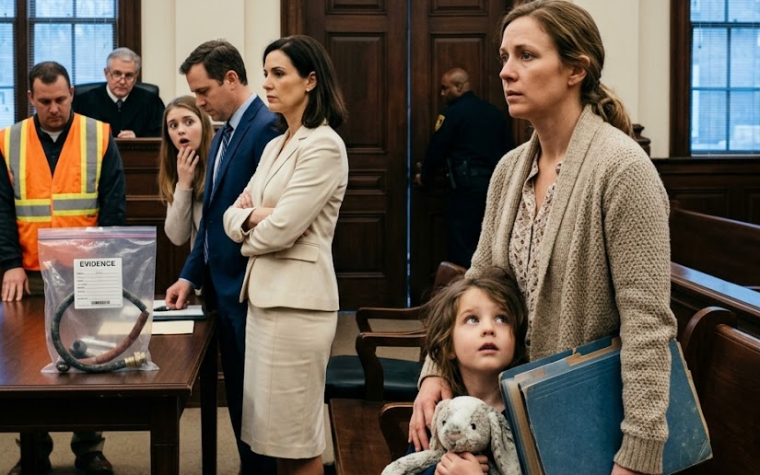
She eventually pleaded guilty to identity theft and attempted financial fraud.
The court ordered restitution, prohibited contact with Daniel, and imposed a sentence that included incarceration followed by supervision.
The legal outcome mattered, but it did not repair Daniel overnight.