Not with a joke about being old-fashioned.
She admitted that Lauren’s caution had protected both children while the rest of us had been more concerned with avoiding embarrassment.
Lauren accepted the apology, but she also set boundaries.
Patricia’s medication would be locked away.
Megan would not enter our home or approach Ethan without supervision and legal permission.
Any relative who mocked Ethan’s medical needs would no longer be welcome around him.
For once, nobody argued.
The following Thanksgiving was smaller.
There were no matching plates, no decorative candles, and no desperate effort to make the family appear perfect.
Patricia ordered most of the meal from a local restaurant.
Chris brought Tyler.
Lauren checked every container before it reached the table.
No one called her dramatic.
Ethan sat beside Tyler, both of them wearing hoodies because Patricia’s dining room was still cold near the windows.
Before anyone began eating, my mother raised her glass.
“I used to think a successful holiday meant getting everyone to the same table,” she said.
“I was wrong.
It means making sure the people at the table feel safe enough to speak—and loved enough to be believed.”
Ethan looked at Lauren.
She smiled at him.
He tried his steak, chewed carefully, and reached for another piece.
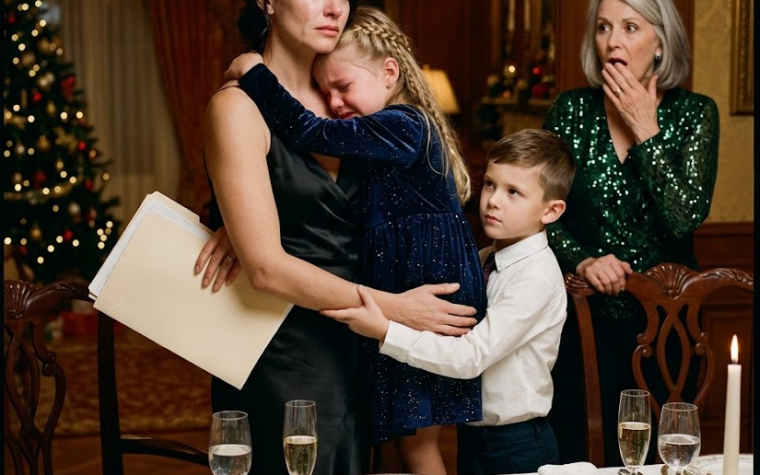
I remembered the previous year’s silence: Tyler’s fork in the air, Lauren’s fallen chair, Megan’s face when the empty bottle appeared beneath the kitchen light.
For months, I had wished I could erase that dinner.
Eventually, I understood that forgetting it would erase the lesson with it.
Ethan had noticed the danger first.
Lauren had trusted him when the rest of us hesitated.
And the person everyone accused of overreacting had been the only adult willing to interrupt the performance of a happy family before it cost two children far more than a ruined Thanksgiving.
That year, when Ethan said the food smelled good, nobody laughed or corrected him.
We listened.