Even then, the prosecution brought the case again.
Daniel returned to the witness stand with the same grief, the same careful pauses, and the same lies.
By morning, I had prepared myself for the possibility that the tablet contained nothing useful.
Instead, the courtroom was sealed before I arrived.
The prosecutor, my lawyer, Daniel’s attorney, and the forensic specialist were already inside.
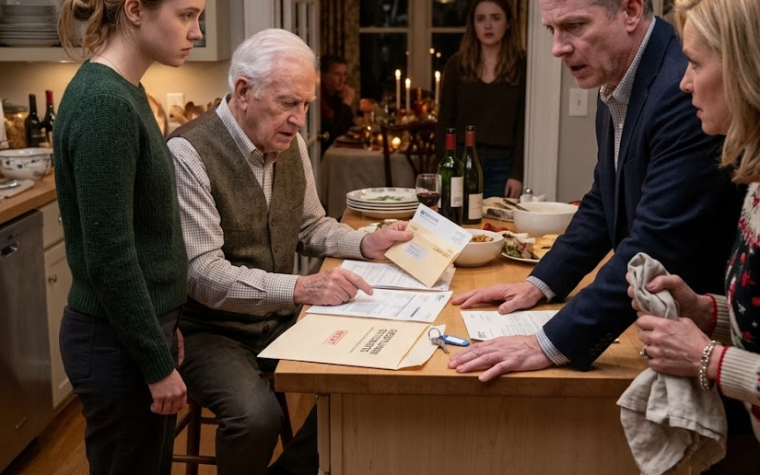
Daniel sat at his table with both hands clasped tightly in front of him.
He had changed suits, but he had not regained his composure.
Noah sat beside my daughter in the back row.
The blue backpack rested between them.
When the judge entered, the specialist was sworn in.
He testified that the tablet was old but functional.
Its internal clock, storage history, and file metadata were consistent with the period before my arrest.
The video had not been edited.
It had been created automatically when Noah activated the camera and had remained untouched for six years.
The recording lasted eleven minutes.
The camera had been placed low to the floor, partially blocked by the leg of a chair.
Most of the image showed the underside of my office desk.
At first, there was only the sound of a child breathing and the faint movement of toy wheels against the carpet.
Then the office door opened.
Daniel entered the frame.
Even from the limited angle, his shoes and trousers were visible.
A reflection in the glass cabinet captured part of his face.
He closed the door behind him and walked directly to the drawer where I kept a small black notebook.
I had used that notebook for passwords when we first started the company.
Daniel had always claimed he did not know where I kept it.
On the recording, he removed it without searching.
The courtroom remained silent as the video played.
Daniel sat at my desk.
He photographed several pages with his phone.
Then he opened my computer and entered one of the passwords.
His voice could be heard clearly.
“She never changes anything,” he muttered.
A few minutes later, he printed a document and placed it over a page containing my signature.
He traced the shape slowly, practicing it several times.
My stomach turned.
The forged signatures the prosecution had shown the jury were not sophisticated digital creations.
They had begun there, beneath Daniel’s hand, while our three-year-old son hid near the desk with a tablet recording everything.
Then another sound came from the video.
A small voice whispered, “Daddy?”
Daniel froze.
He crouched, found Noah behind the chair, and lifted him into view.
“You’re supposed to be asleep,” Daniel said.
Noah asked what he was doing.
Daniel glanced toward the tablet.
Its screen had gone dark to save power, making it appear inactive.
“I’m fixing something for Mommy,” he said.
“This is our secret.”
He picked up the tablet, carried Noah out, and closed the office door.
The recording continued inside the dark backpack where Daniel had placed the device.
His voice became muffled, but one final sentence was audible.
“She won’t be coming home for a while.”
My daughter began to cry.
Daniel’s attorney requested an immediate recess.
The prosecutor did not join the request.
Instead, she asked the specialist whether the recording could be connected to the financial transactions.
He said further analysis was required, but the passwords visible in the video matched the credentials used to authorize the transfers.