My son had shouted because he felt abandoned by his father.
My son had lied because he was ashamed.
And because he was my son, I had made myself responsible for protecting him from every consequence.
Even the consequences he created for me.
“You are my son,” I said.
“That is why I should have stopped this sooner.”
His face hardened again.
“Oh, please.”
He pointed toward Harrison.
“He left.
Remember? He moved to Denver.
He gets to show up after years and pretend he’s some hero now?”
Harrison took the accusation without moving.
“I left Savannah after the divorce,” he said.
“I did not tell you to terrorize your mother.”
“Terrorize?” Wyatt barked.
“Listen to yourself.”
“You broke things in her house.
You demanded money from her.
You threatened her.
Last night you hit her.”
“You weren’t here.”
“No,” Harrison said.
“And that is something I have to live with.
But I’m here now.”
Wyatt pushed away from the table and began pacing.
I recognized the pattern immediately.
Movement meant escalation.
His hands opened and closed at his sides.
His shoulders rose.
His breathing changed.
Usually that was the moment when I surrendered.
I would offer money.
Apologize for my tone.
Tell him we could talk later.
Anything to calm the room.
This time, I stayed in my chair.
“Sit down,” I said.
He spun toward me.
“Stop telling me what to do!”
The shout filled the kitchen.
Harrison stood.
Not aggressively.
Just enough.
Wyatt froze.
His father was older now, but Wyatt remembered him as a large, steady man who rarely needed to raise his voice.
Harrison pointed toward the chair.
“Your mother asked you to sit.”
Wyatt stared at him, then at me.
For a moment I thought he might swing at Harrison too.
Instead, he kicked the leg of the chair and sat.
One of the coffee cups jumped in its saucer.
Nobody spoke until the sound stopped.
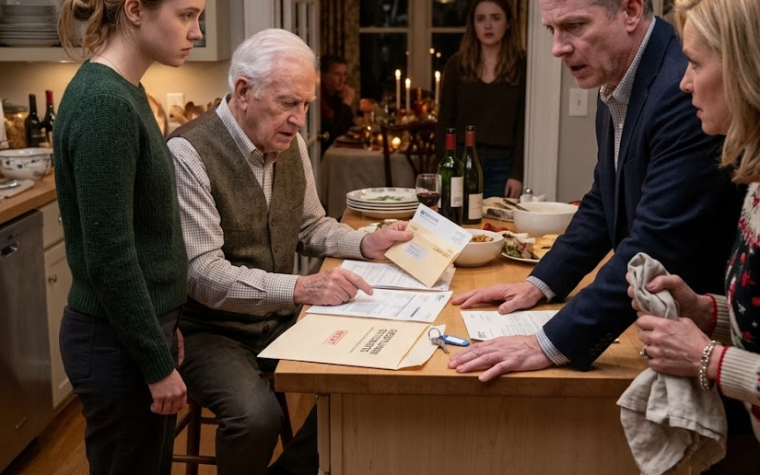
I reached for another page in the folder.
“This is what happens today,” I said.
“You pack what belongs to you.