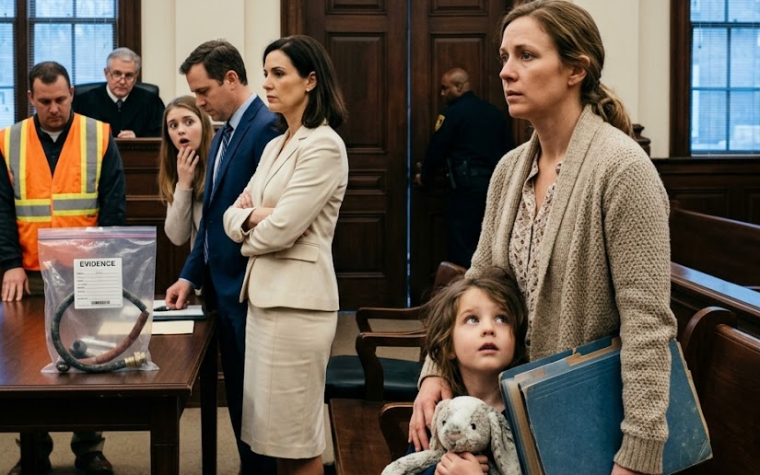
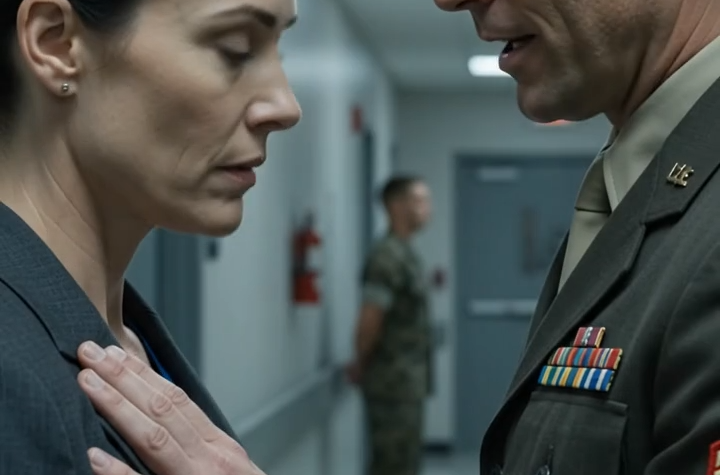
I handed him the phone.
The thread did not contain a grand confession written for an audience.
That was what made it worse.
It was ordinary.
Efficient.
My mother and sister discussed access to the bridal suite.
My mother confirmed she could obtain another keycard.
Brooke complained that I had been controlling the wedding weekend.
Catherine told her that I needed “a lesson” before marriage made me even more rigid.
Then came the line that changed the shape of my childhood.
My mother had written: “She will either cry or get angry.
Either way, everyone will finally see what I’ve been telling them.”
I read it twice when I first photographed it.
Now the officer read it once and looked up.
There were messages about keeping guests downstairs.
About timing.
About my mother handling me afterward.
Brooke had written, “What if she calls security?”
My mother answered that I would not.
“She never makes a scene.”
That sentence hurt more than the ruined dress.
Not because she was wrong.
Because she had built her plan around knowing exactly how thoroughly she had trained me to absorb damage quietly.
The dress had not been destroyed in a burst of jealousy.
It had been staged as evidence against me.
If I cried, I was unstable.
If I became angry, I was dramatic.
If I canceled the ceremony, I proved I cared more about control and appearances than marriage.
If I swallowed it and walked down the aisle pretending nothing happened, Brooke escaped consequence and my mother retained control.
Every available response had been written into their script.
Except the one I chose.
Documentation.
Brooke looked at our mother.
“You said she’d just freak out.”
Catherine snapped, “Be quiet.”
“You said nobody would call the police.”
“Brooke.”
“You gave me the key.”
The officers let her talk.
My grandmother closed the cedar box.
Thirty years, she later explained, did not mean she had known about the wedding dress for thirty years.
It meant she had watched a pattern begin when my mother was young: a need to decide who in the family was admirable and who was difficult, who could be excused and who had to absorb the consequences.
When Brooke and I were children, the pattern gained new characters.
Brooke was rewarded for charm.
I was rewarded for endurance.
Whenever something happened, Catherine’s version arrived first.
A broken keepsake became my carelessness.
A cruel joke became my lack of humor.
A missing object became my suspicious nature.
Brooke’s behavior was repeatedly softened, while my reaction became the real offense.
Grandmother had challenged it privately over the years.
Catherine always denied doing anything deliberate.
Until Lesson Plan.
Until the keycard.
Until the camera.
Until my dress.