I looked at Lily, asleep beneath a thin hospital blanket.
“Rebecca hit a child.
You and Mom locked that child away and planned a lie.
The person whose life you were willing to damage was Lily.”
He told me I was emotional because of Claire.
He said grief had made me unreasonable.
It was the same weapon Rebecca had used in the backyard: turn my love for my wife into proof that I could not trust my own judgment.
But the recording required no judgment.
It showed what happened.
I ended the call.
The next morning, Rebecca contacted me through a long message.
First, she denied slapping Lily.
Then she claimed the contact had been accidental.
Then she said Lily had provoked her.
Finally, she blamed me for allowing a sensitive child to attend a crowded party.
Each explanation contradicted the one before it.
I saved them all.
When Rebecca learned that the audio had captured the laundry room conversation, her story changed again.
She claimed my parents had misunderstood what they heard.
My mother claimed she had been afraid I would overreact.
My father claimed he had been protecting both grandchildren from a family scandal.
None of them explained why protecting Sophie required frightening Lily into a false confession.
The investigation moved forward.
Lily’s medical records documented the injuries.
The video established how the cupcakes fell and showed Rebecca grabbing her.
The audio captured the slap, the threats, and my parents’ plan to lie.
Their messages afterward showed that the cover-up continued even after I took Lily to the hospital.
Rebecca eventually stopped denying that she struck Lily.
Her attorney described it as a momentary loss of control.
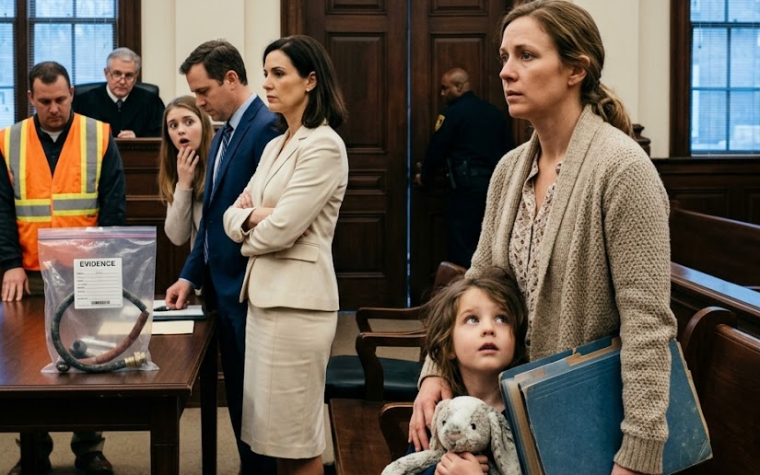
The court treated it as more than a private family disagreement.
Rebecca was ordered to have no contact with Lily, complete counseling and anger-management requirements, and comply with the other conditions imposed in her case.
My parents were not charged with striking her, but their statements were documented, and they lost what mattered most to them: the ability to pretend nothing had happened.
They also lost access to Lily.
My mother came to my house once, carrying a bag of toys and one of Lily’s favorite Jell-O cups.
She stood on the porch and cried before I even opened the door fully.
“We made a terrible mistake,” she said.
I noticed the word we.
Not Rebecca.
Not Lily.
We—as though everyone had simply chosen the wrong decoration for a party.
“You told her I would not believe her,” I said.
Mom wiped her face.
“I was panicking.”
“You locked a frightened child in a laundry room.”
“I was trying to stop everything from getting worse.”
“For whom?”
She had no answer.
I did not let her inside.
For months, relatives urged me to forgive.
Some said my parents were getting older.
Some said Sophie needed her uncle and cousin.
Some said Claire would not have wanted the family divided.
That was the cruelest argument of all.
They used my dead wife’s imagined wishes the same way they had used my grief at the party—to pressure me into doubting what I knew.
But I remembered Claire’s actual words.
Promise me you’ll take care of Lily.