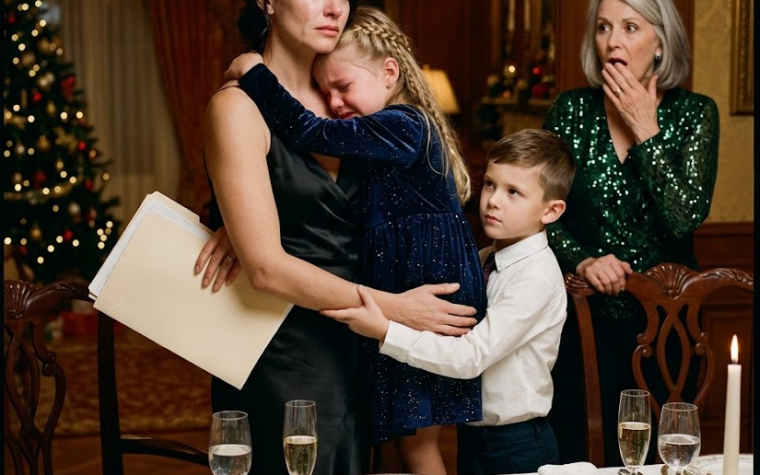
She simply walked over, took my hand, and led me toward the family photographs.
Months later, Madison Estate completed several changes my team had been working on long before that birthday lunch: clearer guest policies, stronger staff authority during member disputes, and less tolerance for people treating exclusivity as permission for cruelty.
My family had nothing to do with those decisions.
That mattered to me.
I never wanted the club reshaped around my humiliation.
I wanted it run well whether the person being humiliated had power or not.
And that became the part of the story I carried with me.
Claire had thought the most powerful person in the foyer would be the one wearing the expensive dress, holding the membership, and speaking loudly enough to summon security.
She had been wrong.
But I had been wrong about something too.
For years, I thought keeping quiet protected me from my family’s judgment.
Sometimes it did.
Sometimes it simply gave them space to keep believing a version of me they had never bothered to examine.
I still live in the same apartment.
I still wear jeans whenever I can.
I still carry work folders in an unremarkable bag.
The difference is that I no longer mistake being underestimated for being invisible.
On my twenty-eighth birthday, my sister tried to send me out a side door because she was ashamed to be seen with me.
Instead, she learned something neither money nor membership could guarantee:
Belonging is not proven by the door someone allows you to use.
And dignity does not become more valuable just because powerful people finally recognize it.