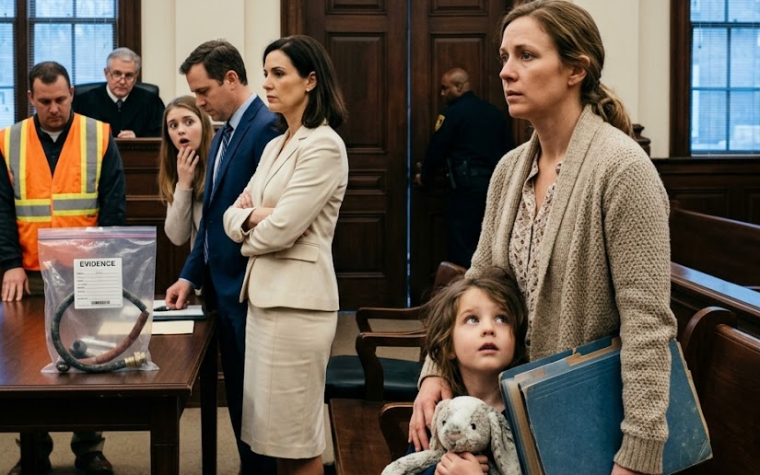
My parents were not granted the authority they had imagined they possessed.
Their opinion did not decide where I lived or whether I remained married.
Outside the courtroom, Grant approached me.
“You embarrassed me.”
I almost recognized the man in that sentence—the man who believed exposure was worse than betrayal.
“You embarrassed yourself,” I said.
Vanessa ended their relationship soon afterward.
She did not do it for me.
She did it because she finally understood that every promise he made depended on someone else believing a lie.
Grant moved into a rented apartment and continued seeing the children according to the schedule.
The divorce took months.
There were arguments about money, furniture, school pickups, and the house.
There was no instant freedom, only paperwork, careful boundaries, and many nights when I questioned every decision.
But the children returned to their rooms.
Grace found her pink rain boots exactly where she had left them.
Ethan placed his dinosaur blanket back on his bed.
Lily stood in the laundry room with me one evening and asked whether I was sorry we had left.
“No,” I told her.
“I am sorry you had to see why we left.”
My mother eventually came to the house alone.
She stood on the porch without knocking twice.
When I opened the door, she looked smaller than I remembered.
“I thought keeping your marriage together would protect the children,” she said.
“You protected the appearance of my marriage.”
She nodded through tears.
“I did.”
I did not invite her inside that day.
Forgiveness was not another door I was required to open simply because someone finally knocked.
She and my father had to rebuild trust slowly, through accountability rather than explanations.
My mother tried.
My father took longer.
Neither was allowed to criticize my decisions in front of the children or communicate with Grant about me.
The hardest part was accepting that home had never been the building my parents owned.
Home was the place where my children could sleep without being used as leverage.
It was the folder of documents I had remembered to pack, the emergency money I had saved, the record button I had pressed when everyone expected me to break, and the calm voice I found after the people closest to me decided I could not be trusted.
The night my marriage ended, I believed I was driving toward safety.
Instead, I found a locked door.
Months later, I understood that the door had forced me to stop waiting for someone else to rescue us.
My parents had chosen Grant’s version because it asked less of them.
Grant had mistaken my restraint for weakness because silence had protected him for years.
But I had not been silent that night.
I had been watching, saving, recording, and choosing.
The final divorce papers arrived on a rainy afternoon.
I signed them at the kitchen table while the children argued cheerfully over whose turn it was to choose dinner.
When I finished, I placed the papers inside the same folder that had held their birth certificates.
Then I closed it.
No applause.
No revenge.
No perfect ending.
Just a quiet house, three children who knew they were safe, and a front door I would never again allow anyone else to close for me.