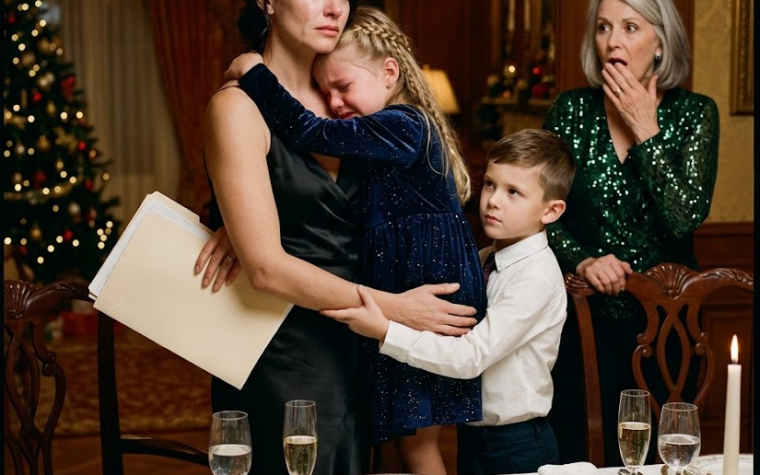
I had repaired roofs, paid bills, redesigned rooms, forgiven insults, and accepted apologies that required nothing to change.
When my mother reached for my hand, I placed it gently back on the table.
“I love you,” I told her.
“But Nora watched all of you plan to take her home.
Love does not make that disappear.”
She nodded because there was nothing else she could honestly do.
The deed arrived by mail three weeks later.
I expected to feel triumphant when I opened it.
Instead, I sat at the kitchen counter and cried so quietly that Nora did not hear me from her room.
The document was only a few pages.
It weighed almost nothing.
Yet it contained every night I had stayed awake calculating construction costs, every weekend spent choosing cheaper finishes, every fear I had swallowed when my parents told me paperwork could wait because we were family.
I had finally received what they promised, but I had lost the illusion that their promise should ever have been enough.
That evening, Nora found me measuring the wall near the front door.
“What are you doing?” she asked.
“Making room for something important.”
I framed the recorded deed and hung it at my eye level.
Not because paper makes a home, and not because ownership can heal betrayal, but because trust should never require a person to remain unprotected.
Nora stood beside me, studying the frame.
“Is this house really ours now?”
“Yes.”
“Can anyone make us leave?”
“No.”
She considered that, then ran to her bedroom and returned with a drawing.
It showed the carriage house beneath an enormous yellow sun.
Two figures stood in front, one tall and one small, holding hands.
Above the roof, in uneven purple letters, she had written our home.
I hung her picture beside the deed.
Months later, I repainted the living room.
I kept the built-in shelves Ava had once measured with her eyes, but I changed the wall color from the pale gray my mother chose to a warm green Nora picked herself.
We planted lavender along the walkway.
I replaced the temporary numbers beside the door with a small brass plaque.
There were no names on it, only the house number, solid and permanent.
My mother visits occasionally now, but only when invited.
My father has never crossed the new property line.
Ava sent one message saying she hoped I was happy with what I had done to the family.
I deleted it.
The family had not broken when I defended my home.
It had broken when the people who claimed to love me decided my work, money, and daughter’s security could be taken because they assumed I would remain quiet.
They were right about one thing: I had always been the person who repaired what everyone else broke.
But I no longer repair things by hiding the cracks.
I reinforce them.
I document them.
I make sure the structure can carry the truth.
Sometimes, late in the afternoon, the sunlight reaches through the living-room window and falls across Nora’s drawing and the framed deed beside it.
The two pages could not look more different—one created by law, the other by a child who only knew that home meant safety.
Together, they tell the same story.
My parents brought me to court believing a title to the land gave them power over everything I had built.
My daughter carried in the proof that showed what they had built instead: a lie.
And when that lie finally collapsed, our home remained standing.