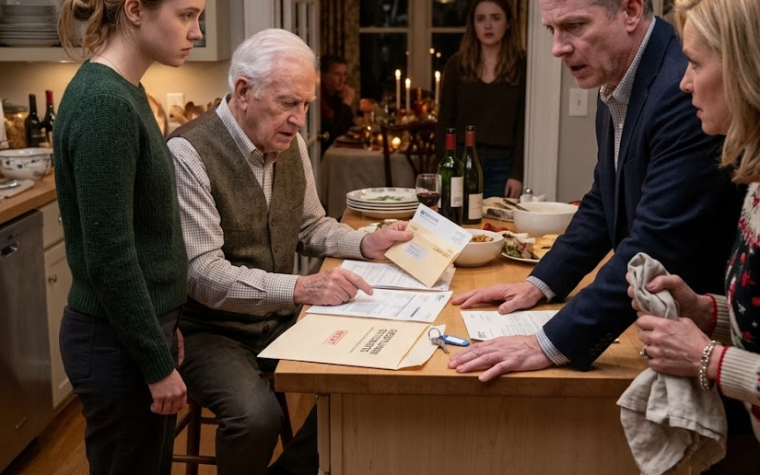
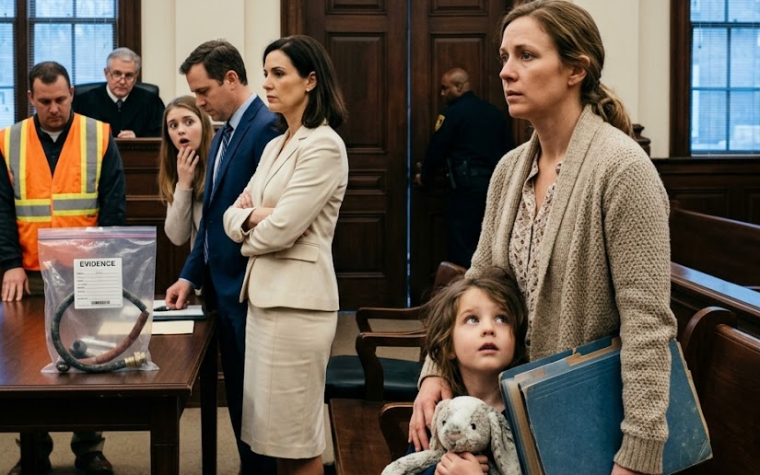
To them, my savings were not the result of choices.
They were a family resource waiting to be claimed.
“Emily,” I said, “the police asked for statements.
Tell them everything.”
“Mom says that could ruin Mark’s life.”
“Mark did this.”
“She says you’ll push for charges because you hate him.”
“I don’t have to push for anything.
The bank reported it.”
Emily fell silent again.
Then she said, “They’re scared of you.”
I almost asked why.
But I knew.
They were not scared that I would lie.
They were scared that I would stop protecting them from the truth.
That afternoon, Matt drove me to the station.
I brought a folder containing seven years of transfers, messages, and promises of repayment.
The pattern looked different on paper.
One request could be an emergency.
Two could be bad luck.
Dozens became a system.
The amounts increased whenever I hesitated.
The language became crueler whenever I asked questions.
My father repeatedly told me not to discuss the money with Emily.
My mother often followed payments with messages about keeping peace in the family.
Mark rarely thanked me directly.
When he did, he called the money a loan.
There was no record of him repaying a single dollar.
The officer who had visited my house turned the pages slowly.
“This isn’t proof that every past request was criminal,” he said.
“But it helps establish the relationship and the pressure being used.”
“I understand.”
“Your brother claims last night was a family loan.”
“He wasn’t the one who called me.”
“No.
Your parents did.”
“And they said he was in an emergency room.”
“Yes.”
The officer placed Emily’s recording beside my messages.
My parents had not simply asked for help.
They had manufactured terror.
Two days later, my mother arrived at our house without warning.
Matt saw her through the front window and asked whether I wanted him to send her away.
I nearly said yes.
Instead, I opened the door but did not invite her inside.
She looked smaller than usual.
Her hair was unwashed, and she wore the same beige coat she used for funerals and serious appointments.
“We need to fix this,” she said.
“Then tell the truth.”
“We were trying to save your brother.”
“From his debt.”
“He was desperate.”
“So you told me he was in the ER.”
Her eyes filled instantly.
“You don’t understand what it’s like to watch your child suffer.”
“I’m your child too.”