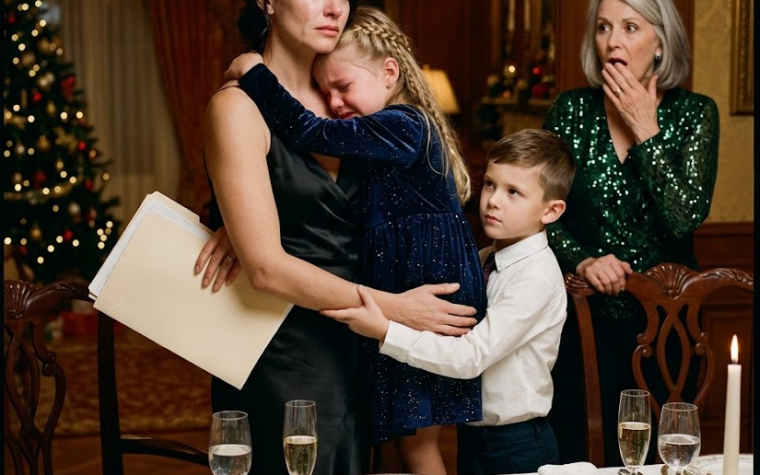
Zoe woke from nightmares.
Patricia attended counseling and learned that apologies without changed behavior were another form of asking the injured person to carry the burden.
I learned something too.
Rescue did not happen in one dramatic moment.
It happened through locked doors, documented words, medical charts, protected rooms, repeated reassurance, and ordinary breakfasts where a child slowly discovered that hunger was not a crime.
When Lauren was strong enough to move into a small apartment of her own, we ate dinner together at her new kitchen table.
I made hamburger steak, mashed potatoes, and peas.
Zoe helped shape the patties.
Lauren sat beside her with her healing arm resting on the table.
Halfway through the meal, Zoe stopped.
The three of us noticed.
She looked at her mother.
“Do you have enough food?”
Lauren’s eyes filled, but her voice remained steady.
“Yes, baby.
I have enough.”
“And nobody gets hurt if I finish mine?”
“Nobody.”
Zoe looked down at her plate.
Then she ate the other half.
Lauren reached for her daughter’s hand, not to stop her, correct her, or demand gratitude—only to be there.
For the first time, an empty plate did not mean someone had taken too much.
It meant a little girl had finally been allowed to keep what was hers.