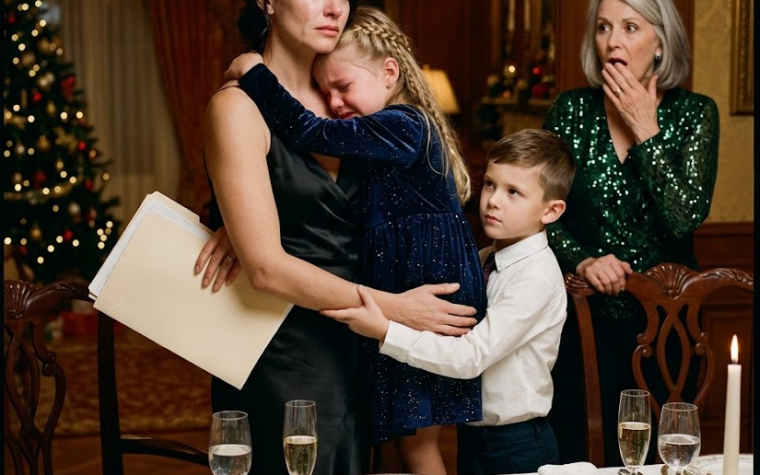
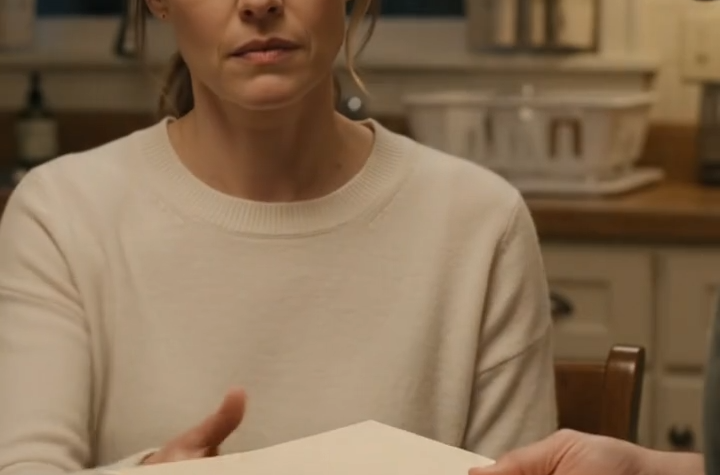
I made you prove something I should have seen.”
I did not ask her to forgive me immediately.
An apology is not a command.
It does not erase the hours someone spent afraid.
I began by changing what I could control.
Susan and Karen were blocked from our phones.
Our apartment locks were replaced.
The hospital placed privacy restrictions on Amy and Sam’s information.
I gave copies of every message, bank statement, and family email to the detective and our attorney.
I also started counseling, because I needed to understand why guilt had controlled me so easily.
My mother had trained me to confuse obedience with love.
Any boundary became betrayal.
Any question became disrespect.
Amy had walked into that system and paid for my refusal to confront it.
Months later, the forged transfer was formally invalidated.
The loan dispute took longer, but the evidence established that I had not signed the agreement.
The property remained in my name, subject to the rights created by my father’s original deed and the court’s orders during the case.
I did not move into the house.
I could not imagine raising Sam in rooms that had been used as leverage against us.
After the legal restrictions allowed it, I sold the property through an independent agent.
The legitimate debts attached to it were resolved, and the remaining money was placed into secure accounts for our family’s housing and Sam’s future.
Susan sent letters through relatives.
Some apologized.
Others blamed Amy.
One said a mother should not lose her home over “one bad week.”
I returned every letter unopened.
It had not been one bad week.
It had been years of deception followed by four days in which Susan and Karen believed they could endanger my wife and child without consequence because I had always chosen comfort over confrontation.
Amy never asked me to hate them.
She asked for safety.
Nearly a year after Sam’s birth, we moved into a modest house with warm bedrooms and windows that caught the morning sun.
On our first night there, I opened the box of coconut candies I had carried home from Santa Rosa.
They were long gone, of course, but I had bought a fresh box from the same shop.
Amy laughed when she saw it.
It was a small sound, but it filled the kitchen.
Then I took out the red bracelet that had fallen from the diaper bag in the hospital.
Sam was too big to wear it by then, so Amy tied it around the handle of a framed photograph from the day he came home.
In the picture, she looked exhausted.
I looked terrified.
Sam slept between us.
We did not look like people who had won.
We looked like people who had survived the cost of finally seeing the truth.
That night, after Sam fell asleep, Amy stood in the doorway of his room.
“You promised no one would hurt him,” she said softly.
I felt the old shame rise, but she took my hand before I could look away.
“You came back,” she continued.
“And this time, you stayed.”
The family I had been accused of abandoning was standing beside me.
For the first time, I understood that blood could explain a relationship, but it could not excuse cruelty.
Loyalty without truth was only fear wearing a respectable name.
I had spent years believing that protecting my mother from consequences made me a good son.
Protecting Amy and Sam finally taught me how to be a husband and father.