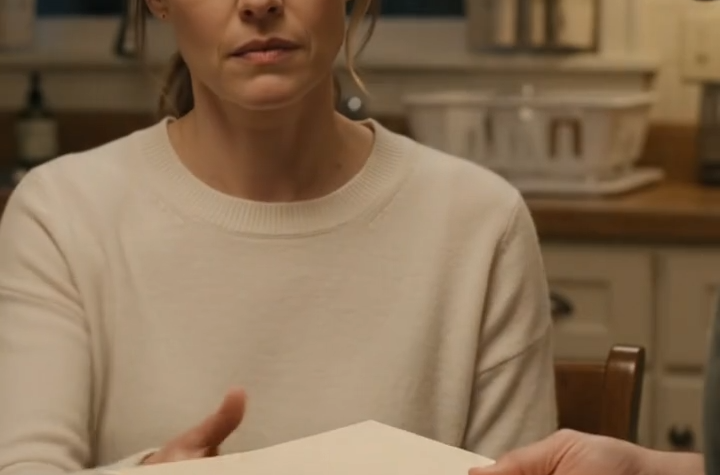
Celeste insisted the problem was temporary.
She needed someone to cover the arrears, the penalties, and the repairs required by the insurer.
I used nearly everything I had saved.
When the bank refused to restore the old loan, I purchased the property through a closing Elias supervised.
The deed went into my name because no lender would approve my mother and because Julian refused to accept responsibility for the debt.
Celeste had begged me not to tell anyone.
She said the truth would humiliate her.
So I allowed her to stay.
I paid the property taxes, replaced the leaking roof, repaired the foundation, and covered the household account whenever her spending exceeded what she could afford.
She told her friends that the Whitlock estate had survived because of her determination.
I never corrected her.
Julian dropped the deed onto the table.
“Even if this is real, Mom has lived here for years.
That gives her rights.”
Elias opened the folder wider.
“It gives her the rights described in the occupancy agreement she signed.”
He removed another document.
This one carried Celeste’s signature on the final page.
My mother looked at it and shook her head.
“I sign dozens of household papers.”
“You signed this in my office,” Elias said.
“You had independent counsel present.
The agreement allows you to occupy the property while Mara retains full ownership and responsibility.
It does not grant you title.”
Celeste’s cheeks flushed.
“This is vulgar.
Discussing family finances in front of guests is vulgar.”
Elise let out a small, disbelieving breath.
“You called your daughter a filthy animal while she was bleeding on the floor,” she said.
“But the deed is vulgar?”
Julian rounded on her.
“Stay out of this.”
Elise looked at the broken crystal, then at his hand.
“You knocked over the glass.”
“It was an accident.”
“And you watched her take the blame.”
Julian’s jaw tightened.
“Mara always makes herself the victim.”
I had heard that sentence in a hundred forms throughout my life.
When Julian destroyed my school project, I was dramatic.
When he took money from my room, I was selfish for counting it.
When he mocked my decision to enlist, I lacked humor.
When my mother introduced him as her only successful child, I was too sensitive.
Standing beside the table that I had paid to restore, I finally understood why silence had never bought peace.
It had only made their version of events easier to repeat.
Elias reached into the folder again.
My mother watched his hand with open fear now.
“What else is in there?” she asked.
He looked at me.
I nodded.
He removed a third document and placed it beside the deed.
The heading was visible from where Celeste stood, but the signature line at the bottom was blank.
Julian read it first.
His face changed.
“What were you planning to do?”
I answered without looking at him.