Months later, the final divorce papers arrived at my townhouse.
I sat at my small kitchen table while Grace slept against my chest.
The settlement was fair, not extravagant.
I received what the law determined I was entitled to after proper disclosure.
More importantly, the arrangements surrounding Grace were built around documented facts rather than Daniel’s version of reality.
I signed the final page.
For a moment, I expected fireworks inside myself.
There were none.
Only quiet.
The kind of quiet that once scared me because it meant Daniel was angry somewhere in the house.
Now it meant Grace was sleeping.
Rain tapped against the window.
The refrigerator hummed.
My phone lay faceup on the table, mine to answer or ignore.
I looked around at the crooked cabinets and secondhand furniture and felt richer than I had in the house I’d been willing to surrender.
On the morning of that first hearing, Daniel believed I had given him everything.
He saw a pregnant woman abandoning money and mistook desperation for defeat.
Vanessa saw an empty house waiting for her and mistook possession for victory.
Even I believed I was paying a ransom.
But the real price of freedom turned out not to be the house, cars, accounts, or business.
It was telling the truth after years of being trained to whisper it.
And the person who cracked open the silence wasn’t a lawyer, a wealthy ally, or some perfect piece of evidence I’d carefully prepared.
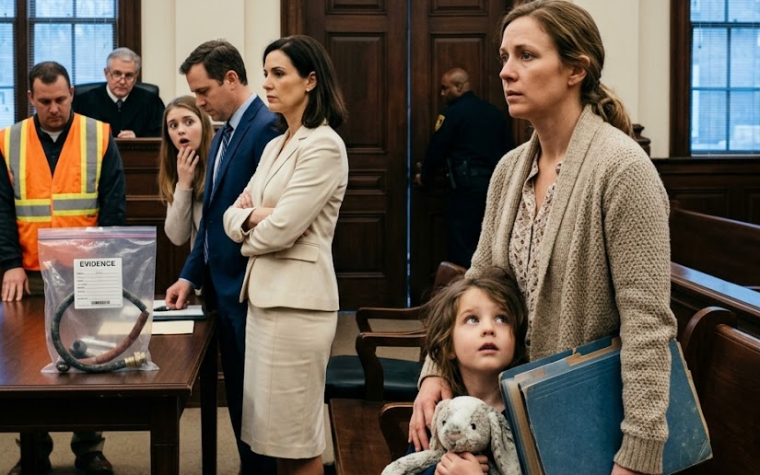
It was a six-year-old girl with a worn teddy bear who walked into a courtroom and asked one simple question:
Do judges protect children from bad fathers?
That question forced every adult in the room to stop pretending not to see what was in front of them.
Daniel had spent years making women believe they were alone.
In the end, his greatest mistake was failing to imagine what would happen when we discovered we weren’t.