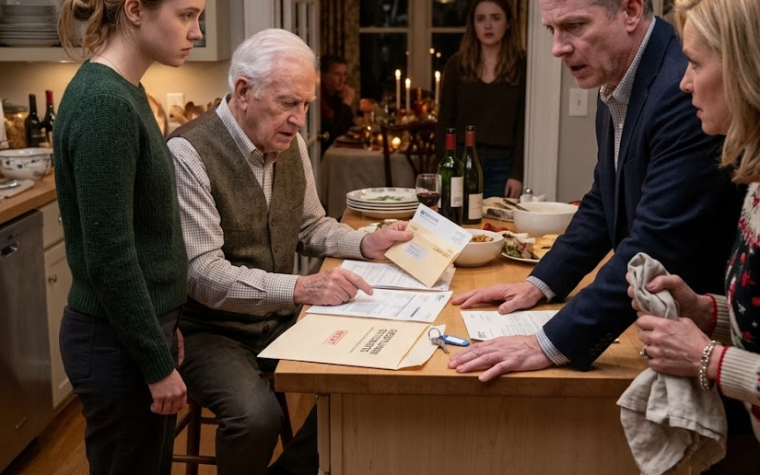
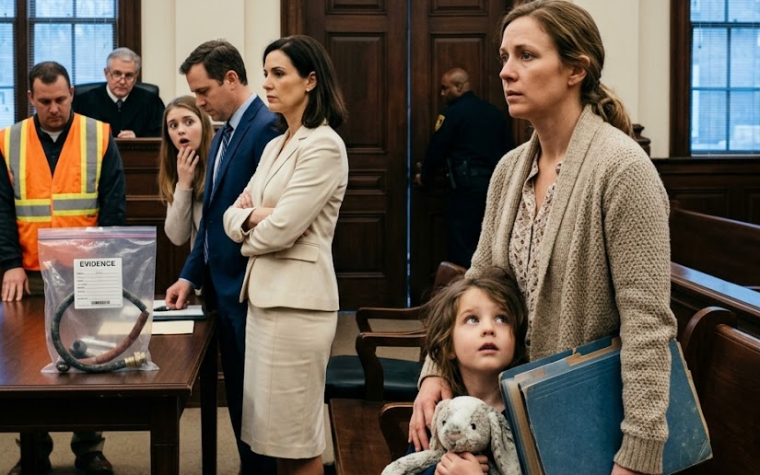
Over the following weeks, the attempted sale collapsed completely.
The buyers received their deposit back.
Their attorney withdrew after the title records confirmed that William had lacked authority to convey the property.
The title company opened its own internal review of how the transaction had advanced as far as it had.
My belongings were returned from storage after my lawyer demanded a complete inventory.
Nothing important was missing.
The divorce took longer.
William alternated between apology and resentment.
Some days he said Margaret had pushed him.
Other days he accused me of hiding Victoria’s estate planning from him, even though I had not known the details myself.
Margaret stopped speaking to me entirely after her attorney advised her to stop involving herself in the property dispute.
For the first time in twenty-seven years, her silence felt like a gift.
The settlement was not theatrical.
There was no judge pounding a gavel while William begged.
No one was marched away in handcuffs.
Real endings are usually quieter than fantasies.
We divided what was actually marital property.
His business remained his.
My inheritance remained mine under the applicable estate arrangements.
The trust property stayed under my control according to Victoria’s plan.
William signed the final divorce papers almost a year after the afternoon he had stood on the porch and told me I had nowhere to go.
He looked exhausted.
Before leaving the conference room, he said, “I wish I could take that day back.”
I believed him.
But regret is not a time machine.
“I wish you had chosen differently before you knew about the money,” I said.
He looked down.
“So do I.”
That was the last honest thing we ever said to each other.
The following winter, I went to Aspen alone.
Victoria’s house stood beneath a deep blue sky with snow gathered along the roofline.
I made tea in her kitchen and found the same jar of honey she had used during our conversation months before she died.
I sat at her table with her letter beside me.
For years, I thought strength meant enduring discomfort without making trouble.
Grandma understood something I had not.
Strength could also mean reading the document.
Keeping the key.
Asking who owns what.
Refusing to sign because someone is standing over you demanding peace.
I used part of the inheritance to restore the house William had tried to sell.
I put the porch swing back.
I replanted the flowers.
I rehung the old curtains instead of the ones Margaret had chosen.
Not because objects mattered more than people.
Because choosing them myself mattered.
The leather folder from the will reading now sits in a locked cabinet in my study.
Grandma’s handwritten letter is inside it.
Sometimes I take it out and read the final line.
You do not need to become hard, Caroline.
You only need to become impossible to erase.
For most of my marriage, I believed peace was something I preserved for everyone else.
Victoria’s final gift taught me that dignity was something I was allowed to preserve for myself.