Two deputies followed him.
“I opened the gate for them,” he said.
Grant stared at his youngest brother as if betrayal were an offense only he was allowed to feel.
The deputies ordered Grant and Owen away from me.
Grant tried to argue that he was a co-owner, but Daniel’s voice came through the computer again.
“The final quiet-title judgment was entered fourteen months ago.
Your appeal was dismissed.
You have no ownership interest and no permission to enter.”
One deputy examined the damaged side door.
Grant’s shoulders dropped by a fraction.
The mansion became very quiet except for the low security tone and Owen’s uneven breathing.
They were not taken away in handcuffs that afternoon.
The deputies photographed the broken door, separated the brothers, and escorted all three from the property.
Daniel arrived twenty minutes later carrying a hard case of documents and looking angrier than I had thought a soft-spoken attorney could look.
He found me sitting on the library floor beneath the skylight.
“I told you to call before entering,” he said.
“I know.”
He crouched beside me.
“Are you hurt?”
“No.”
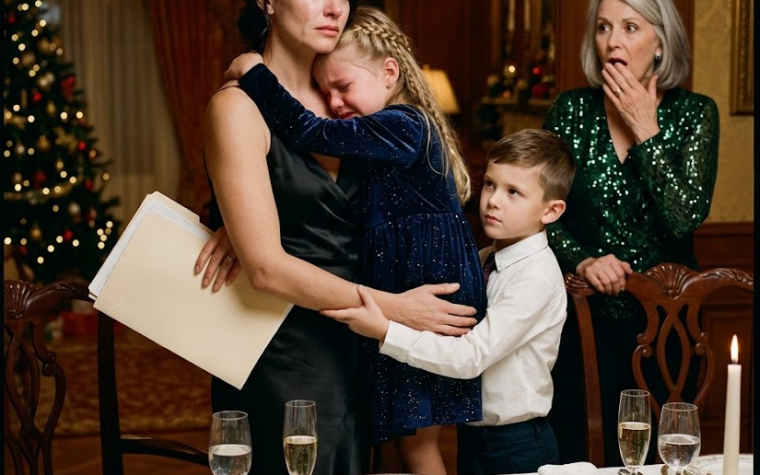
That was when I began to cry.
Not because of Grant.
Because Michael had expected this.
He had built a system around the moment: the key, the alert, the recording, the duplicate files, the delayed trust.
He had spent his final years preparing to protect me from a battle he had never trusted me enough to see.
Daniel waited until I could breathe again.
Then he explained the rest.
The $11.8 million offer had been arranged through a company Grant quietly advised.
If I had signed the original papers without review, nearly three million dollars would have been diverted as “consulting fees” to entities connected to the brothers.
Michael had discovered the structure shortly before his aneurysm.
That was why he had been so frightened in the hospital.
He did not know whether the trust documents had been finalized.
He did not know whether Daniel had secured the original deed.
He only knew his brothers might learn that I was the beneficiary.
“So he made me promise never to come,”
I said.
Daniel nodded.
“He intended to amend the instructions once the liens were cleared.
He believed he had more time.”
Michael’s death had frozen the plan in its most fearful form.
Never go there.
Not wait.
Not go with Daniel.
Never.
For weeks afterward, the mansion became evidence.
Accountants traced transfers.
Handwriting experts examined the guarantees.
The security system preserved Grant’s threat about Sophie and his attempt to force me to sign.
Philip cooperated first.
He admitted he had witnessed documents without seeing Michael sign them.
He claimed Grant had told him the signatures were authorized.
He surrendered old emails showing that Owen had sent him scanned copies and instructed him where to sign.
Owen followed when prosecutors confronted him with the files.
Grant held out longest.
He insisted Michael had betrayed the family by refusing to share the estate.
He described every forged signature and diverted payment as repayment for work he believed he deserved.