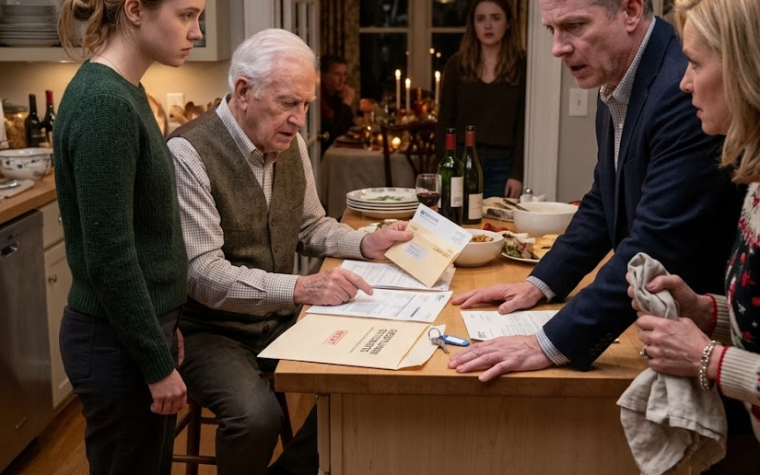
No strangers in the house.
You take care of me like before, and I’ll change the will.”
I looked up.
There it was.
A negotiation.
He had finally placed a price on the devotion he once believed he owned.
“No.”
He blinked.
“You didn’t even hear what I was offering.”
“You offered me a future promise in exchange for returning to unpaid work today.
I heard you perfectly.”
His mouth opened, then closed.
I went back to reading.
The financial pressure also changed Thomas.
The monthly transfers slowed while the records were being reviewed and Steven’s care expenses increased.
Thomas started calling more often.
At first he called Steven.
Then, reluctantly, he called me.
The first time, he demanded to know why his father hadn’t sent the usual amount.
“Ask your father.”
“He says you’re controlling everything.”
“I’m not.”
“Then fix it.”
“No.”
He was quiet.
I realized he had probably never heard that word from me either.
Thomas had spent years believing my politeness meant powerlessness.
Steven had taught him that.
Now both of them were discovering the difference.
The strongest evidence wasn’t one dramatic secret.
It was the pattern.
Statements showing money leaving regularly while basic household expenses were being squeezed.
Messages showing Thomas expected the transfers.
Conversations showing both men understood I was providing care without compensation and believed my vows guaranteed I would continue.
The will showed how completely Steven had planned a future without protecting me.
None of those facts alone turned him into the cartoon villain he wanted to accuse me of inventing.
Together, they told the truth of our marriage.
Steven had not merely accepted sacrifice.
He had budgeted around it.
When formal proceedings began between us, Steven’s first reaction was denial.
His second was anger.
His third was bargaining.
Then came blame.
He told relatives I was abandoning a disabled husband.
Some called me.
One cousin said, “Brenda, how can you do this now? He depends on you.”
I asked one question.
“Which night would you like to take over?”
Silence.
Another relative told me marriage meant sacrifice.
“Five years,” I said.
“How many more are you volunteering for?”
That conversation ended quickly too.
People admired devotion most when someone else was performing it.
The home care nurse, however, understood immediately.
She had watched me for years.