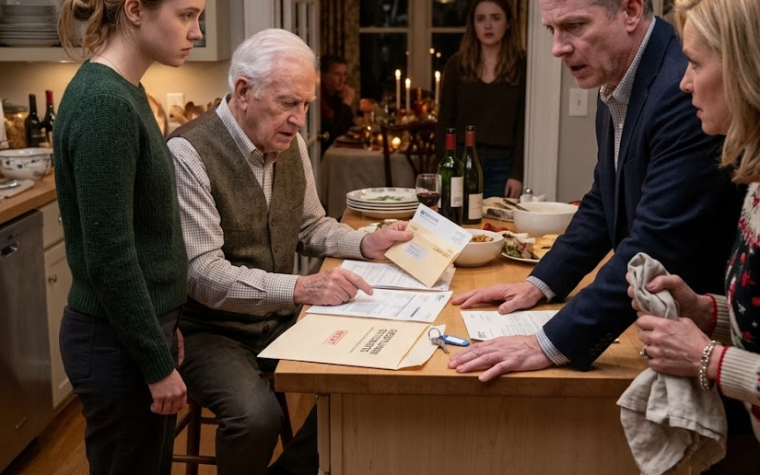
The original recording showed four pages on the kitchen island.
Daniel had submitted six.
The added pages attempted to grant him access not only to the portfolio and lake house but also to my insurance proceeds, private accounts, and voting interest in his company.
Daniel’s attorney stopped taking notes.
My attorney asked, “Did your wife authorize you to alter those papers?”
“No.”
“Did she authorize your mother to forge the trustee’s confirmation?”
“No.”
“Did she authorize you to use her money for gambling?”
Daniel looked toward the judge.
“My finances are irrelevant to the incident.”
“They are the motive.”
The next records came from accounts Daniel had hidden behind his company.
For nearly two years, he had taken loans using inflated revenue projections and then covered the payments with money I contributed to keep the business alive.
He told me the company was struggling because a major client had delayed payment.
In reality, thousands had gone to casinos, private clubs, and the apartment he rented for his mistress.
Margaret’s luxury spending appeared in the same ledger: designer jewelry, resort charges, furniture, and monthly transfers disguised as consulting fees.
When one account ran low, she wrote checks against an account bearing my name.
Three signatures were mine.
Seven were not.
A forensic document examiner had compared them with known samples.
The forged checks shared the same pressure pattern and letter formations as Margaret’s handwriting on her sworn statement.
Margaret began to cry.
This time, nobody mistook it for sorrow.
“I did everything for my son,” she said.
“She controlled all the money.
She made him feel small.”
Daniel turned toward her again.
“You spent more than I did.”
“You told me she would never notice.”
“You were supposed to handle the checks.”
Their attorneys tried to stop them, but panic had broken the partnership that greed had built.
Margaret pointed at Daniel.
“The apartment was his idea.
The loans were his.
He said once she signed, we could pay everything back.”
Daniel’s face reddened.
“You poured the oil.”
“Because you said she had to be frightened!”
The courtroom became silent enough to hear the ventilation system.
The judge looked from Margaret to Daniel.
“Are either of you aware that you are speaking in open court?”
Neither answered.
My attorney played the final minute of the kitchen recording.
Paramedics entered.
Daniel leaned close to my stretcher and whispered, “Enjoy being alone.”
My voice, faint behind the oxygen mask, answered, “You first.”
The screen went black.
For months, Daniel had described those words as a threat.
In the courtroom, their meaning was finally clear.
I had not been threatening his safety.
I had been telling him that the life he built with my money was already ending.
The judge called a recess and ordered both Daniel and Margaret to remain in the courthouse.
Court officers stood near the doors while the attorneys conferred.
My lawyer sat beside me without speaking.
She placed her hand near mine, close enough to offer support without touching the healing skin.