Then she said, “I thought the worst part was going to be finding out something was inside me.”
I waited.
“But I think the worst part was wondering if I was allowed to trust myself.”
I put my food down.
She turned toward me.
“I don’t want to feel like that again.”
“You shouldn’t.”
“Neither should you.”
The words caught me off guard.
For fifteen years, I had thought my job was to teach my daughter how to move through the world.
That day, she handed one of those lessons back to me.
By the time we reached home, nothing outside looked different.
The hedges were still trimmed.
The porch was still neat.
Victor’s car was in the driveway.
Anyone passing our house would have seen the same respectable family they had always imagined.
But inside, the silence had changed.
Emily no longer used it to swallow pain.
And I no longer mistook it for peace.
The scan had revealed a mass that needed to be removed.
The weeks around it revealed something less visible but just as important: how dangerous certainty becomes when one person’s voice is allowed to outweigh everyone else’s experience.
Emily healed.
Her follow-up visits remained reassuring.
Her strength returned.
Her grades recovered.
Pictures slowly appeared on her bedroom walls again.
And whenever she told me something felt wrong—whether it was pain, fear, or simply a bad feeling I could not immediately understand—I listened before I decided what it meant.
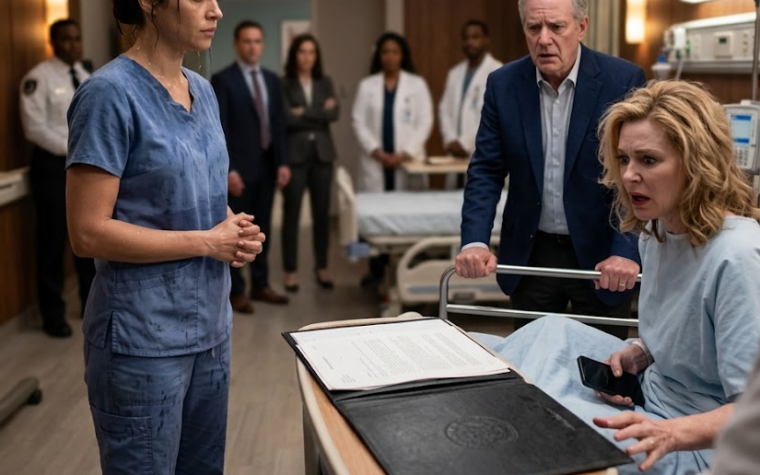
Because the afternoon Dr.
Avery opened that folder, I learned something I should never have needed a scan to prove.
My daughter had been telling the truth long before a machine finally made it visible.