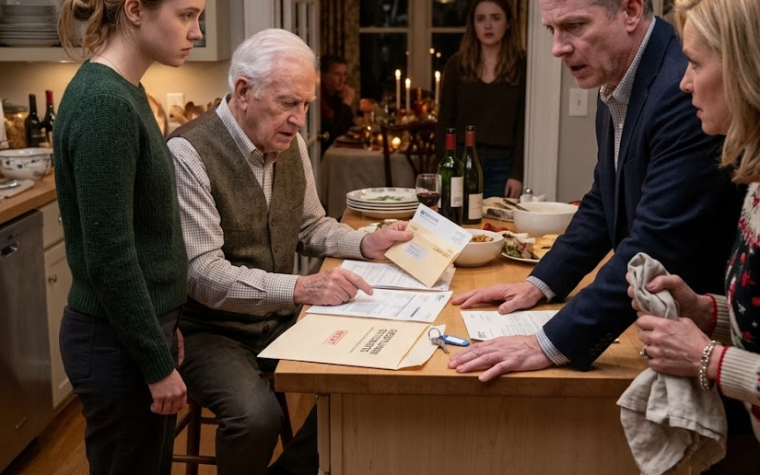
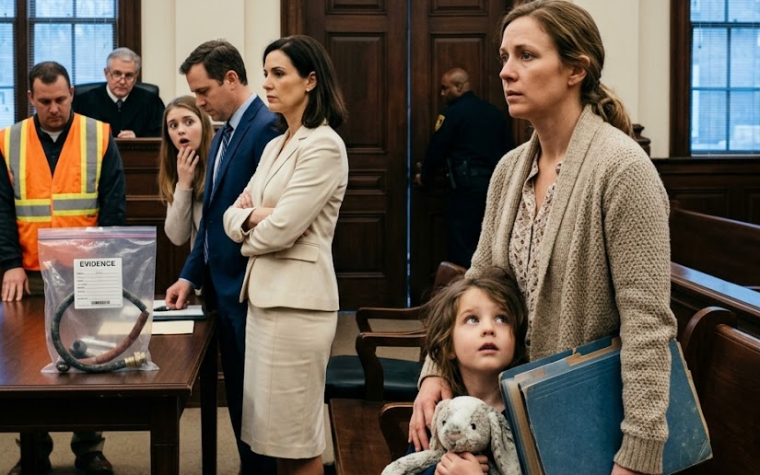
The secret was more ordinary and, in some ways, harder to accept.
Adults who loved me had been frightened, grieving and selfish at the same time.
My father had tried to control how I learned the truth.
My grandparents had reacted to losing their son by treating me like something that might also be taken.
And Veronica, terrified of losing the child she had promised to raise, had turned one defensive choice into fourteen years of lies.
None of that erased what she had done for me.
None of what she had done for me erased the lie.
Both things were true.
I met my grandparents again a month later.
My grandmother brought a box of photographs.
My grandfather moved slowly and cried before I even reached the porch.
For hours, they told me stories about my father that Veronica had never known.
How he broke his wrist at twelve trying to jump a bicycle over a drainage ditch.
How he failed his first accounting exam and told everyone the professor had made an arithmetic mistake.
How he had called them from the hospital after I was born and said, through tears, “She has Mariana’s mouth.”
My grandmother also brought photographs of Mariana.
In several of them, Veronica was there.
At a picnic.
At a birthday dinner.
Standing beside Mariana in the hospital waiting room during pregnancy.
The evidence did not make Veronica’s lie smaller.
It made her love harder to dismiss.
Months passed before I called her Mom again.
There was no dramatic reconciliation.
Trust returned in boring pieces.
She stopped answering questions with softened versions of the truth.
She gave me every box from the attic.
She helped arrange visits with my grandparents without trying to control them.
When I asked about Mariana, she told me stories even when those stories made her cry.
One evening, I found her at the kitchen counter making cinnamon coffee.
For a second I saw every version of her at once.
The young woman standing beside my pregnant mother.
The stranger in the bakery pretending not to know my father.
The woman kneeling in front of a little girl and asking whether she could take care of her forever.
The frightened widow who made a terrible decision.
The mother who stayed.
She turned toward me.
“Do you need something, Vale?”
The word came out before I planned it.
“Mom.”
She froze.
Exactly as she had the first time I called her that fourteen years earlier.
Her eyes filled, but she did not rush toward me.
She had finally learned not to decide what I needed before I did.
I walked to her instead.
Calling her Mom again did not forgive every lie.
It did not return the birthdays my grandparents had missed or erase the years I had been denied my biological mother’s face.
It meant something more difficult.
I could hold the whole truth now.
Veronica had not entered my life by accident.
She had entered it because people who loved my mother and father had tried, imperfectly, to build something around the little girl they left behind.
And when fear corrupted that love, I was finally old enough to demand that love survive without secrecy.
My father had written that I should be allowed to choose.
For the first time, with every photograph on the table and every lie exposed, I finally could.