The agent saved the recording.
That was the first moment fear stopped controlling me.
Someone had expected grief to make me obedient.
Instead, every instruction they gave us was becoming evidence.
The agent opened the sealed case.
Inside were several original recordings and records my father had apparently refused to store electronically.
She compared serial numbers, photographed seals and contacted her team through an encrypted line.
The response was immediate.
Federal teams that had been waiting for confirmation began moving.
I heard clipped phrases I only partly understood: warrants ready, surveillance confirmed, vehicles identified, family secure.
The dark sedan from my father’s photographs had been seen near Route 9.
It had followed me from the cemetery.
It was parked outside the storage facility now.
I moved toward the door.
The agent blocked me.
“Don’t.”
“I want to see who it is.”
“They want you to want that.”
So I stayed where I was.
That may have been the hardest thing I did all night.
For years, my father had apparently survived by refusing to react when someone else expected him to.
Now I understood what restraint actually cost.
Minutes later, headlights moved beyond the narrow gap beneath the door.
A car idled.
Then accelerated away.
The agent received another update.
The vehicle had been intercepted several miles down Route 9.
Information found with it connected the surveillance around my family to the broader case my father had built.
That connection mattered.
Until then, my father had documents showing a network of suspicious transactions, threats and coordinated pressure.
Now there was fresh evidence showing someone had acted against his family immediately after his staged death.
The trap intended for us had tightened the case against them instead.
By midnight, agents were executing warrants in several locations connected to the investigation.
Records were secured before they could disappear.
Communications were preserved.
People who had spent years relying on silence suddenly had federal officers at their doors.
The agent refused to give me names or predict charges.
“This isn’t over because we opened a cabinet,” she said.
“Cases like this survive only if the evidence survives with them.”
For the first time that night, I understood why my father had spent twenty years preparing for one evening.
He had never expected a single dramatic confession to destroy powerful people.
He had built redundancy.
Copies.
Witnesses.
Dates.
Original recordings.
Instructions given to people who did not know each other.
And, finally, an empty coffin that forced anyone watching him to choose between believing the death or exposing themselves by checking.
They checked.
That was their mistake.
Just before dawn, I was taken to a secure federal location outside the city.
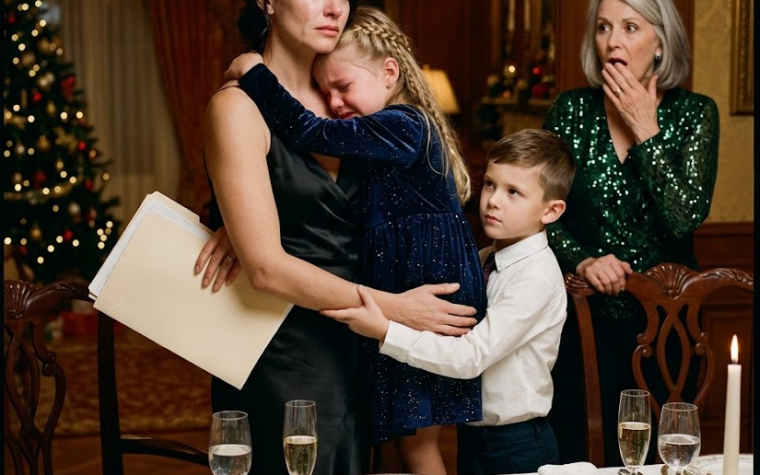
My mother was already there with Celeste and the children.
She crossed the room and grabbed me so hard I could barely breathe.
“I never sent that message,” she said.
“I know.”
“They told me you sent one too.”