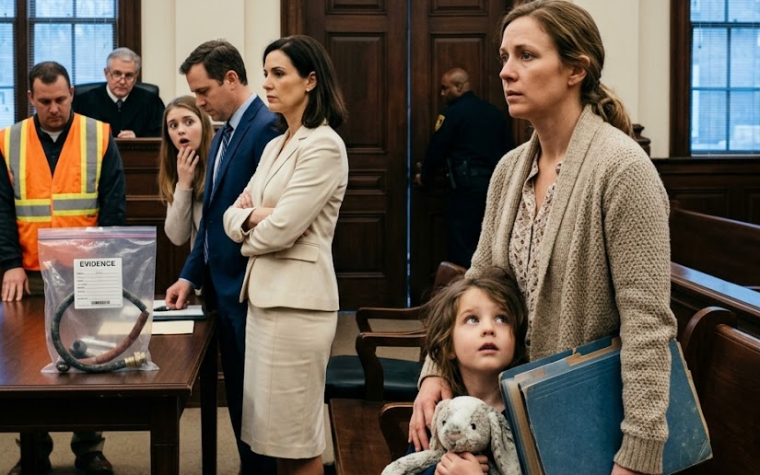
Instead, he walked into a room where every person had independent representation.
That changed everything.
Julia laid out the timeline.
The amendment.
The notices.
The letter.
Noah’s birth.
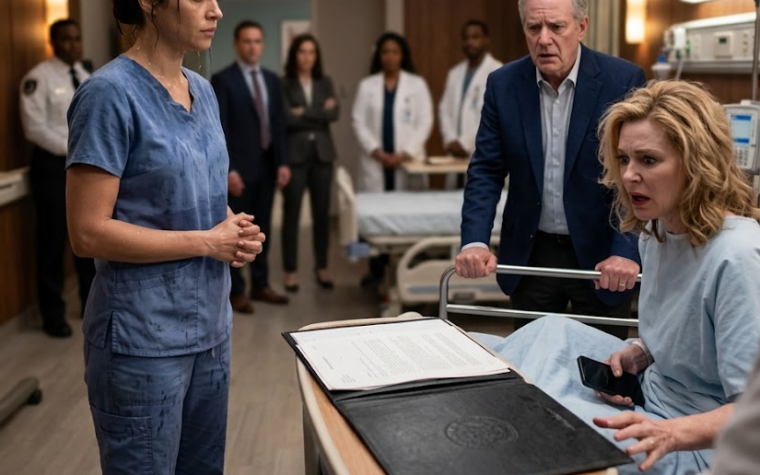
My father’s hospital visit.
The proposed waivers.
My mother’s voicemail.
Richard’s lawyer interrupted twice, trying to frame the hospital papers as an administrative shortcut.
Mason’s lawyer asked why the shortcut had never been disclosed to Mason.
Nobody had a good answer.
Then my mother spoke.
“Because Richard thought Mason would agree with him if Mason believed Chloe was simply being difficult.”
My father turned toward her.
“Eleanor.”
She kept going.
“You told me the papers would protect Mason.
You didn’t tell me you had already been warned not to approach Chloe without independent counsel.”
“This is not the place.”
“You made her hospital room the place.”
The room went silent.
I had spent my entire childhood watching my mother soften his sentences, redirect his anger, and maintain the appearance that our family was fine.
That day, she stopped doing it.
Richard denied coercing me.
He said he had never threatened me.
Julia did not need to prove a criminal act or turn the meeting into a courtroom drama.
The trust had its own safeguards.
The question was whether any purported consent from me would be treated as informed, independent, and valid.
It would not.
The proposed waivers were withdrawn.
The successor trustee was formally notified of Noah’s birth and my representative status.
Future trust decisions affecting his protected interest would require proper notice.
I would receive independent advice.
Mason would retain the rights genuinely granted to him, but not the imaginary absolute control my father had been promising.
And Richard’s authority narrowed.
The trustees instituted additional review for transactions involving conflicts between family branches.
Certain decisions he had once handled informally now required written approval from independent fiduciaries.
He was not dragged away in handcuffs.
He did not lose everything overnight.
The consequence was quieter and, for him, probably worse.
He lost the privilege of being automatically believed.
Mason stopped accepting his version of the trust without checking the documents.
My mother stopped covering for him.
I stopped mistaking obedience for peace.
Months later, when Noah was old enough to hold my finger with surprising strength, my mother came to our townhouse alone.
She brought a small blue blanket.
The gift she should have brought to the hospital.
She stood inside our doorway for several seconds before saying, “I looked at that envelope before I left your room.
I knew Richard had dropped it.”
I stared at her.
“You knew?”
“I knew enough.”
“Why didn’t you hand it to him?”
Her eyes filled, but she did not look away.