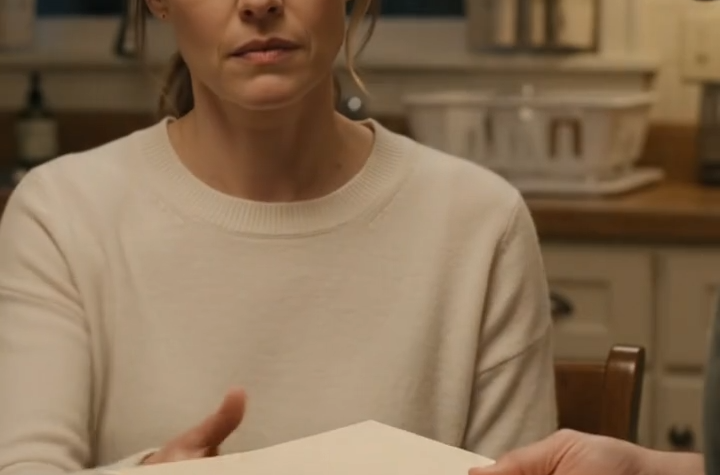
I met with an attorney and brought everything I had saved from Elmwood Drive.
Ten years of payments did not magically erase the name on the title.
I learned quickly that fairness and paperwork were not the same thing.
But the records mattered.
So did Richard’s repeated promises, especially where they could be supported by old messages and by the way the property had actually been managed.
I had acted for years as someone investing in a home he expected to own, not as a casual tenant handing money to a landlord.
The attorney did not promise me an easy victory.
That was strangely reassuring.
He simply told me there was enough to fight with.
So we fought.
Richard responded exactly as I expected.
First he treated my challenge as disrespect.
Then as betrayal.
Then as extortion.
When none of those words ended the dispute, he tried another strategy: reconciliation.
He asked relatives to tell me that families should not destroy each other over property.
I thought about that sentence for a long time.
He had announced the removal of my home in front of an entire wedding reception.
When I objected, he put me in the hospital.
Yet somehow the destruction of the family began when I stopped accepting it.
I did not answer him directly.
My attorney handled the property communication.
The criminal case followed its own path.
The full video made denial difficult.
My injuries were documented.
Witnesses had seen what happened.
Richard could argue about motives and humiliation, but he could not reasonably argue that the wall had reached out and struck me by itself.
A court ordered him to stay away from me while the case moved forward.
That order changed my daily life more than the millions of views did.
For the first time, I did not have to calculate whether Richard might arrive at Elmwood Drive furious because I had ignored a call.
I did not have to answer the door simply because he was my father.
I did not have to participate in a conversation just because he demanded one.
Months passed.
The internet moved on, as the internet always does.
Five million views became an old number attached to an old clip.
That was fine with me.
I never wanted to become the man from the wedding video.
I wanted my life back.
My sister and I began speaking carefully.
There was no miraculous repair between us.
Some wounds needed more than an apology.
But she did something important: she stopped defending Richard.
When asked what happened, she told the truth.
She said the house announcement had surprised her.
She said I had objected verbally.
She said Richard struck me.
And she repeated, in writing through the proper channels, that she did not want the Elmwood property transferred to her.
The property dispute eventually ended not with a dramatic courtroom speech but with signatures.
Richard faced the records I had preserved, the money I had invested, the years of promises that could be supported, and the reality that my sister would not accept the gift he had announced.
A settlement transferred Elmwood Drive into my name.
This time, the promise was not verbal.
I watched every page.
I checked every line.
When the final deed was recorded, I held the copy for a long time without celebrating.
It was just paper.
But after ten years of trusting someone else’s word, paper felt extraordinary.