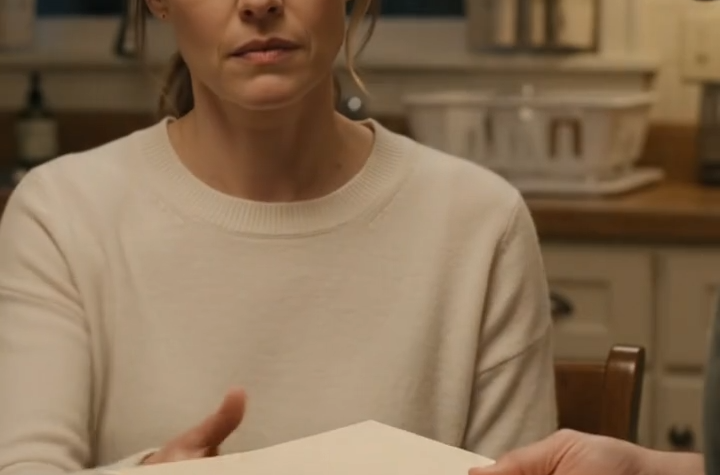
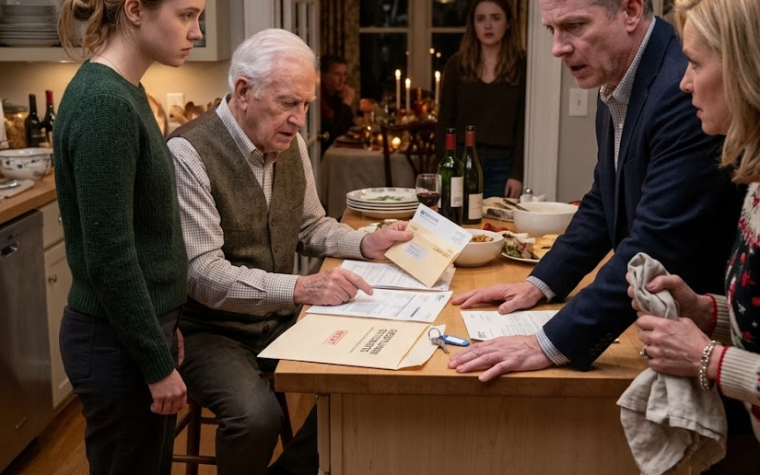
My father stood.
“Can we start over?”
“Not today.”
It was not revenge.
It was the first honest boundary I had ever given him.
Weeks later, he sent a letter to my new apartment.
There were no excuses inside it.
He admitted that he had valued appearances, dismissed my work, and used Haley’s ambitions as a reason to belittle mine.
He did not ask me to forgive him immediately.
I kept the letter, but I did not answer until I was ready.
Haley eventually sent a message of her own.
She apologized for taking the ticket and admitted she had known, at least for a moment, that it mattered to me.
She had chosen the photograph anyway.
Our relationships did not heal in a dramatic afternoon.
Some damage requires more than embarrassment and more than one apology.
Trust returned slowly, in small pieces, when actions finally matched words.
My father attended my first public research presentation months later.
He sat in the back row without announcing himself to anyone.
He did not ask for a photograph.
He did not introduce himself to the donors.
When the presentation ended, he waited until the room emptied.
“I listened,” he said.
It was not enough to erase the past.
But it was the first time he understood what support required.
I kept the gold invitation in the top drawer of my desk beside the scholarship medallion.
For a long time, I thought it represented the seat my father had refused to take.
Eventually, it came to mean something else.
It reminded me of the morning I stood outside in the rain while the people who had underestimated me walked through the doors carrying my name.
They believed the ticket gave them access to something important.
They never understood that the important person was the woman they had left outside.
And when those bronze doors finally opened for me, I did not enter as someone’s ignored daughter, unwanted stepsister, or invisible helper.
I entered under my own name.