“Did you ever tell your parents that you would finance this home?”
“No.”
“Did you agree to reimburse their down payment or other expenses?”
“No.”
“Did you sign any written agreement to do so?”
“No.”
Jason suddenly spoke.
“But you have the money.”
I turned toward him.
The judge did too.
Jason seemed to realize how terrible the sentence sounded only after it had left his mouth.
He tried again.
“I mean, she had savings.
Everybody knew that.
My parents thought she would help.”
The judge leaned back.
“What someone can afford and what someone agreed to pay are two different things.”
Jason stared at the table.
That sentence stayed with me.
For years, my family had deliberately blurred those two ideas.
If I had enough, then I owed them.
If Jason needed something, then my refusal was selfishness.
If my parents decided what my money should be used for, then somehow their decision became my obligation.
In their house, that logic had worked because they controlled the emotional rules.
In court, it was just an unsupported claim.
The judge asked for the sequence of events.
Dad said they had found the house Jason wanted and had helped with the down payment because the opportunity was too good to lose.
Mom said they were certain I would understand.
Jason admitted he knew my credit was stronger than his.
Then the judge asked the question that exposed the entire structure.
“If Ms.
Carter had already promised to finance the transaction, why was it necessary to surprise her with documents at dinner and ask her to sign?”
No one answered.
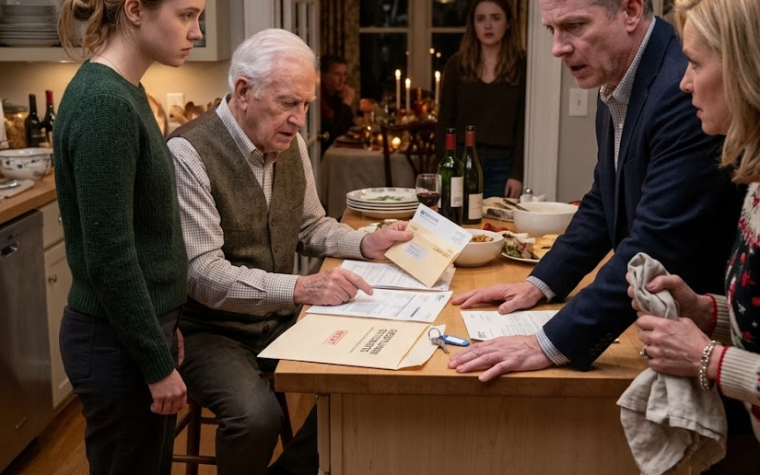
I remembered that dinner perfectly.
Mom’s forced smile.
Dad pouring wine.
Jason sitting beside the folder like a man waiting for someone to hand him keys.
They had created the setting carefully.
They wanted me surrounded.
They wanted the excitement of the house to make refusal feel cruel.
They wanted three voices against one.
And when that failed, they had sent relatives after me.
When that failed, they sued.
The judge asked whether they had any message, email, signed document, recording, or other evidence showing that I had agreed to pay for Jason’s house before they committed their money.
Dad said there had been family conversations.
Mom said everyone understood what I was supposed to do.
Jason said he had always believed I would help.
The judge asked the question again.
“Do you have evidence of her agreement?”
They did not.
My mother started crying.
At dinner, her tears had made me doubt myself for several hours.
I had sat in my apartment afterward wondering whether refusing really did make me a bad daughter.
In court, the tears looked different.
They were not proof.
They could not change dates.