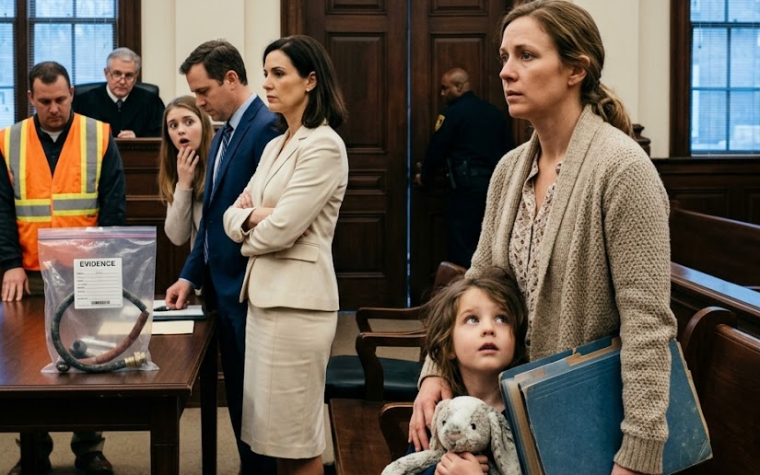
“See? Indicators.
Not proof.”
I closed my eyes.
This was how every argument in my family worked.
They pushed until somebody challenged them, then demanded courtroom-level proof that the pushing had ever happened.
But this time there were records.
There was a folder.
There was a bank manager sitting three feet away from them.
And I finally had no reason to protect them from the consequences of their own choices.
“Daniel, I want all third-party access permanently revoked unless I personally authorize something new in writing through the bank.”
“Understood.”
My sister gasped.
“You can’t do that.”
“I already did.”
“My wedding is in six weeks!”
“Then you have six weeks to figure out how to pay for it.”
“You promised to help me.”
That stopped me.
Because she was right about one thing.
Months earlier, I had offered to help with reasonable wedding expenses.
I had not promised unlimited money.
I had not promised a $10,000 dress.
And I certainly had not promised to fund people who could ignore my son’s surgery and contact me three days later only because they wanted cash.
“I offered to help my sister,” I said.
“I did not agree to become an account your entire family could withdraw from whenever you wanted.”
“Your entire family?” Mom repeated.
“Listen to yourself.
We are your family.”
I looked again at Caleb.
“Family would have known whether he survived surgery before asking for ten thousand dollars.”
Nobody answered.
Daniel said he needed to end the call briefly so the bank’s internal security team could be contacted.
Before disconnecting, he confirmed that my accounts would remain locked against all third-party actions.
Twenty minutes later, he called again.
My parents and sister were no longer in his office.
“They left?”
“They were asked to leave the customer area while we review the material.”
“What happens now?”
“The bank will preserve the documents they presented and compare them with our authenticated records.
You should also review all accounts for activity you do not recognize.”
That sentence scared me more than I expected.
I spent the next hour going through years of transactions.
Most were familiar.
Groceries for Mom.
A repair Dad said he needed urgently.
Deposits for my sister’s florist and photographer.
Nothing had technically been hidden because I had given them access.
But seeing the total was different from remembering each request one at a time.
Thousands of dollars had flowed outward in small pieces.
Every payment had arrived wrapped in a reason.
Every reason had sounded temporary.
Together they formed a pattern I could no longer pretend not to see.
My family had built part of its lifestyle around my inability to say no.
By afternoon, my mother began sending messages.
First came anger.
“You humiliated us at the bank.”