“It’s a nice place,” he said.
I felt something move in my chest.
Not forgiveness.
Not yet.
But the words still mattered.
“Thank you.”
He nodded.
“We handled this badly.”
I studied his face.
There was no speech attached.
No demand waiting behind the apology.
No sentence beginning with but.
So I let him continue.
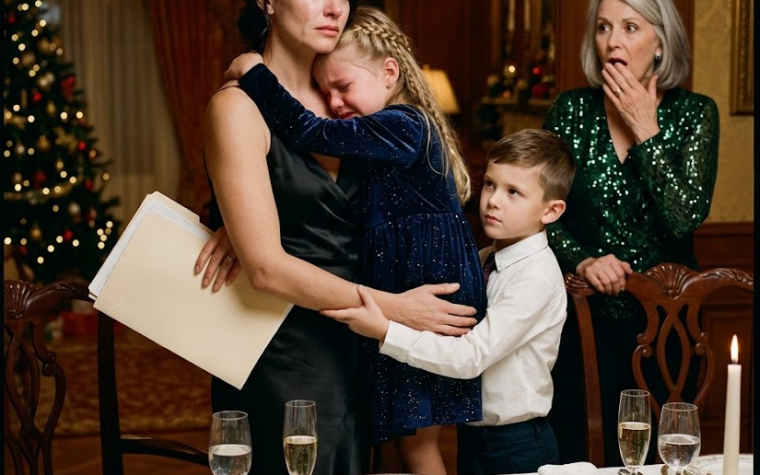
“Your mother especially feels terrible about dinner.”
“And you?”
He rubbed his jaw.
“I do too.”
I believed that he regretted the outcome.
I wasn’t yet sure he understood the cause.
“Dad, I need you to hear something.”
He looked at me.
“You don’t get to ignore my achievements because they make Kevin uncomfortable and then claim those same achievements when he needs something.”
His expression tightened, but he stayed silent.
“You can’t refuse to celebrate the house and still expect access to the house.”
He looked toward the floor.
“That sounds harsh when you say it like that.”
“It felt harsher living it.”
A long silence passed between us.
Finally, he nodded.
“I suppose it did.”
That was the first apology I had ever received from my father that wasn’t disguised as an explanation.
I stepped aside.
“Do you want coffee?”
He looked surprised.
“Yes.”
I let him in because I wanted to, not because family had entitled him to the doorway.
That difference changed everything.
Mom came the following weekend.
She brought a lemon tart.
It wasn’t as good as Grandma’s recipe, and we both knew it.
She placed it on my dining table and stared at the tiny old wax stain.
“I kept thinking about that dinner,” she said.
“So did I.”
She pressed her lips together.
“I thought protecting Kevin meant not making him feel worse.”
“And what did protecting me mean?”
Her eyes filled.
“I assumed you didn’t need it.”
There it was again.
But this time she heard herself say it.
She looked around the room slowly.
“I think we’ve assumed that about you for a very long time.”
I didn’t rescue her from the discomfort.
“I know.”
Kevin took longer.
For nearly two months, we didn’t speak.