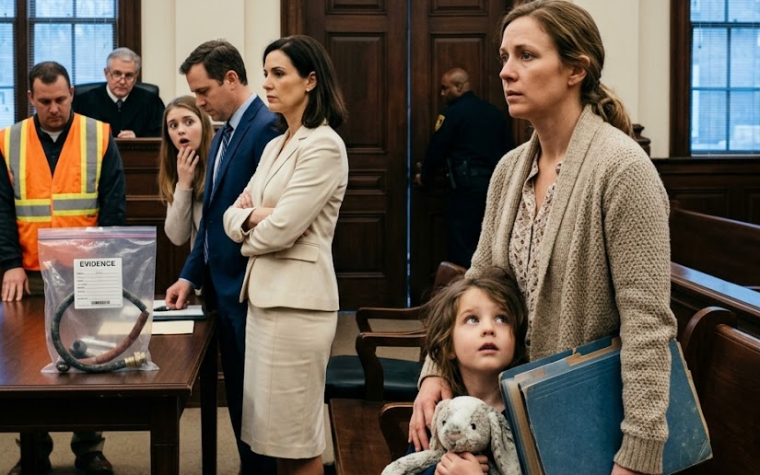
“I understand the account carried my name,” she said.
“Anthony told me it was legal.
He said Marissa had approved everything because it reduced taxes.”
“That is not what I said,” Anthony snapped.
“You told me to sign the forms.”
“You knew what you were signing.”
The officers separated them.
Within an hour, the building’s lobby had become a collection point for evidence.
Security preserved the hallway video.
The locksmith surrendered the messages Anthony had sent when arranging the job.
My board’s general counsel saved the meeting recording.
My attorney transmitted the forged authorizations and transfer records to the bank’s investigators.
The auction house also received a preservation notice.
Eleanor had not merely tried to buy a necklace.
The winning bid required a substantial deposit, and the remainder would have been charged after the auction.
A $50,000 piece of jewelry was portable, resellable, and easier to conceal than money moving through a monitored account.
The declined card had interrupted their plan before they knew the bank was examining the source of the funds.
Canceling it had forced Anthony to act too quickly.
His impatience had exposed the entire structure.
He and Eleanor were escorted from the penthouse separately.
Anthony continued insisting that I would regret making a private disagreement public.
I watched the elevator doors close without answering him.
Only then did my hands begin to shake.
One of my partners remained on the video call after the others left to coordinate with counsel.
“You handled that better than most people would,” she said.
“I nearly opened the door before I checked the camera.”
“But you didn’t.”
I looked at the ruined deadbolt on the floor.
For years, Anthony had trained me to respond immediately—to defend myself, explain myself, or calm him before his anger became worse.
That morning, I had done none of those things.
I had observed.
I had recorded.
I had called people whose authority he could not intimidate.
The forensic review lasted weeks.
Each day uncovered another layer.
Anthony had created the shell company shortly after I began questioning his mother’s spending.
He copied my signature from a legitimate closing package and placed it on fabricated board consents.
He redirected statements to the private mailbox and created an email rule that forwarded bank notices to an address he controlled before moving them into an archived folder.
He had also generated invoices that imitated the formatting used by real consultants working with my firm.
The transfers began small.
Twenty thousand dollars.
Thirty-five thousand.
Amounts that disappeared inside quarters involving hundreds of legitimate transactions.
Once he realized no one had noticed, the payments grew.
The shell company paid Eleanor’s credit card, luxury travel, jewelry purchases, and renovations to a residence she claimed had been funded through family savings.
It also transferred money into an account Anthony had not disclosed during the divorce.
By the time the bank froze everything, the fraudulent activity totaled several million dollars.
The attempted $1.2 million transfer would have been the largest and final withdrawal.
Anthony denied forging the documents.
Then he claimed I had verbally authorized them.
When metadata showed the files had been created on a computer registered to him, he argued that I often used his devices.
The board meeting recording destroyed that defense.
On the video, he could be heard ordering me to end the call, reaching for the laptop, and repeating the false claim that I was mentally unstable.
The security footage showed him moving directly toward the drawer containing the authentication key.
The locksmith’s messages showed planning rather than panic.
At 4:17 that morning, Anthony had written, “She may refuse to answer.