He stared at me with the solemn expression of a child who had learned that adults could make paper say almost anything.
“Can Dad make you dead again?”
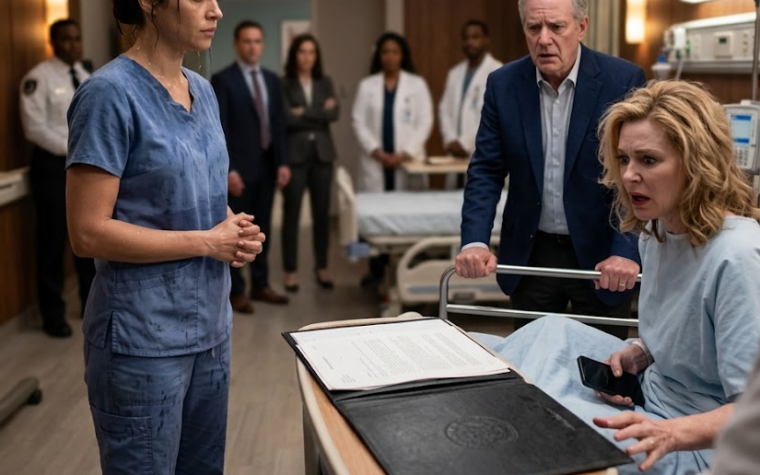
I climbed carefully into the hospital bed and held him.
“No,” I said.
“And if you’re scared, you tell me.
If I’m scared, I’ll tell you.
We don’t keep fear locked in rooms anymore.”
He considered this for a while.
“Can we leave the door open?”
“Always.”
Calvin was charged with kidnapping, unlawful confinement, insurance fraud, falsifying records, and several related offenses.
His attorneys tried to portray me as unstable because I had continued visiting the grave every day.
The argument failed.
My visits did not prove delusion.
They proved I loved the child Calvin had taken from me.
The cemetery woman who had seen Evan run into my arms testified about Calvin’s reaction.
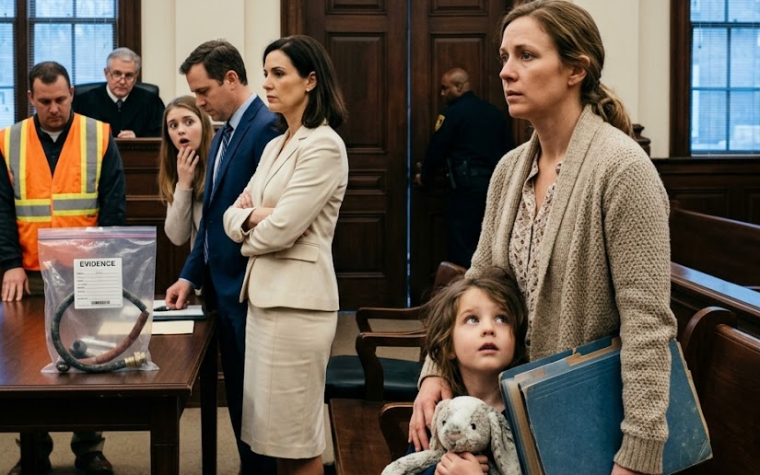
The workers described how he tried to seize the photograph and folder.
Hospital staff confirmed Evan had survived his medical emergency.
Financial investigators traced every payment.
The rental records, messages, DNA report, forged signatures, and empty casket formed a chain Calvin could not break.
Most powerful of all was Evan’s recorded interview.
He did not speak like a witness seeking revenge.
He spoke like a frightened child trying to understand why his father had told him his mother was underground.
Before the case reached trial, Calvin entered a guilty plea in exchange for removing Evan from the burden of appearing in court.
He received a long prison sentence and was ordered to surrender the remaining insurance money and assets connected to the fraud.
No sentence could return the year he stole.
It could not erase the nights Evan cried for me in a locked house or the mornings I knelt beside an empty grave.
But it stopped Calvin from rewriting what he had done.
Recovery did not arrive as a single happy moment.
Evan had to relearn ordinary things.
He struggled in crowded rooms.
He became frightened when I closed doors.
He watched my face whenever a telephone rang, certain that one call could make someone disappear.
We worked with doctors and a trauma counselor.
I gave him choices whenever possible—what shirt to wear, which cereal to eat, whether the hallway light stayed on.
Small decisions helped rebuild the safety Calvin had taken from him.
When we returned home, Evan stood outside his bedroom for nearly a minute.
I had kept everything almost exactly as he left it.
His sneakers remained in the closet.
His toy cars were lined along the shelf.
The pajamas Calvin had called embarrassing were folded inside the dresser.
Evan touched the doorframe.
“You didn’t give my room away.”
“It was always yours.”
The porch cat appeared that evening and rubbed against his ankles.
For the first time since the cemetery, Evan laughed.
The sound was quieter than I remembered, but it was his.
Weeks later, the false headstone was removed.
The cemetery offered to repair the ground and erase every sign that a grave had been there.
I asked them to leave the patch of earth untouched until Evan and I could visit together.
On a clear afternoon, we stood where the stone had been.
Evan held my hand and stared at the rectangle of new grass.
“Did you talk to me here?” he asked.
“Every day.”
“I couldn’t hear you.”
“I know.”