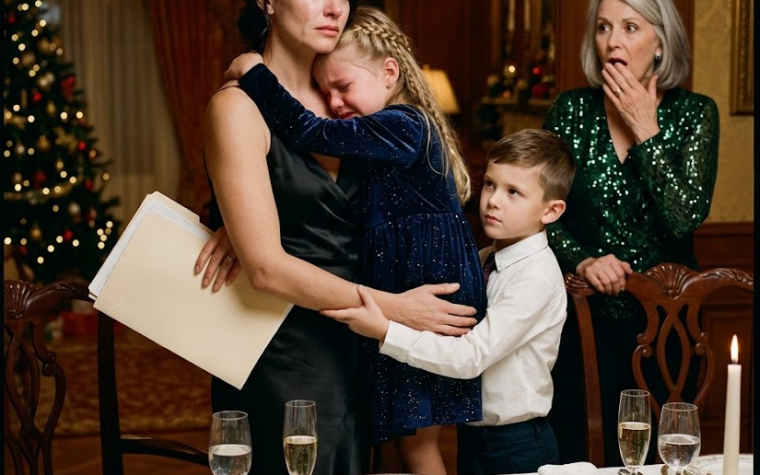
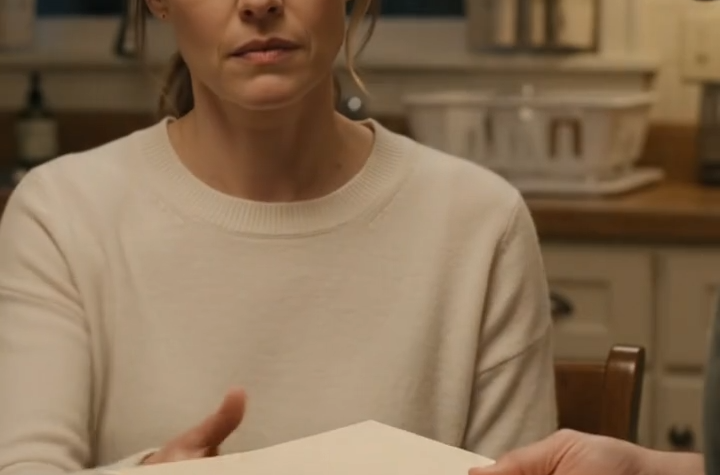
We did not repair everything that afternoon.
Some things cannot be repaired in one conversation because they were not damaged in one conversation.
Trust returned in small pieces.
Rachel began bringing the twins to my apartment on Sunday afternoons.
At first, she stayed only long enough to drop them off.
Later, she came in for coffee.
She stopped making little jokes about me being old-fashioned or needing help with technology.
I stopped automatically reaching for my purse when we went to the grocery store together.
Once, several months later, the five of us had dinner at their house.
Afterward, Rachel began clearing plates.
I stood to help from habit.
She touched my shoulder.
“Sit down, Mom.
You’re a guest.”
There was no performance in her voice.
No audience.
No exhausted little smile asking for credit.
I sat.
Mark carried dishes to the sink.
Noah climbed into my lap.
Lily brought me a picture she had drawn of our family.
This time, I was in the middle.
Rachel eventually repaid part of what I had contributed, though I never asked for all of it.
Much of that money had gone toward my grandchildren, and I did not regret helping them.
What I regretted was confusing generosity with obligation.
What Rachel regretted was more complicated.
She once told me, almost a year after the morning I left, that the worst moment had not been discovering the canceled payments.
It had been seeing the folder.
“I knew exactly what it meant before you showed me anything,” she said.
“I knew you had kept track because some part of you already knew I wasn’t telling the truth about you.”
She was right.
The folder had never really been about money.
It was evidence that I had been present in my own life even while someone else was rewriting it.
I still keep it in a drawer.
Not because I expect another fight.
Because I learned something I wish I had understood earlier.
Love does not require disappearing.
Helping someone does not make you their property.
Being older does not make your money communal, your labor invisible, or your dignity negotiable.
And independence is not only the ability to pay your own bills.
Sometimes it is the ability to stop paying everyone else’s.
These days, my apartment is quiet in the mornings.
I bought another basil plant and put it in a blue pot near the kitchen window.
Carol found me an enormous secondhand armchair that Thomas would have hated on sight, which is exactly why I bought it.
On Wednesdays, I play cards.
On Fridays, I shop for exactly what I need.
And when Lily and Noah visit, they scatter toys across my living room, eat more snacks than I think humanly possible, and call me Grandma with the same certainty they always have.
The difference is that when their mother comes to pick them up, I kiss them goodbye and close my own door behind them.
Then I stand for a moment in my own quiet home, surrounded by my own books, my own bills, my own choices.
Nothing about it looks dramatic.
That is what peace often looks like after you have had to fight to get it back.