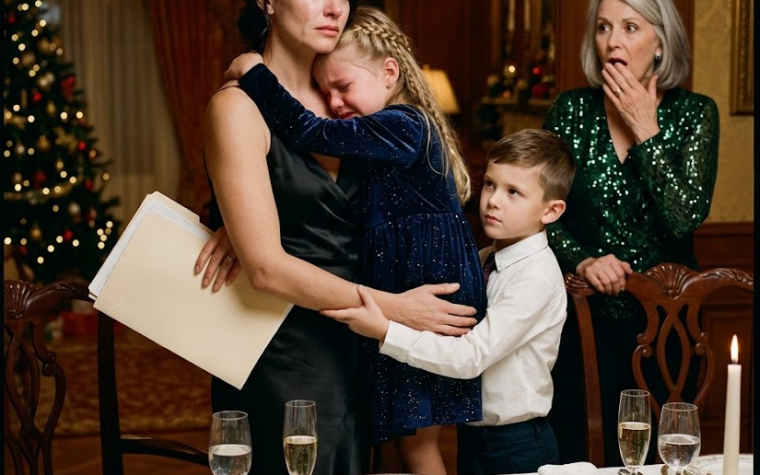
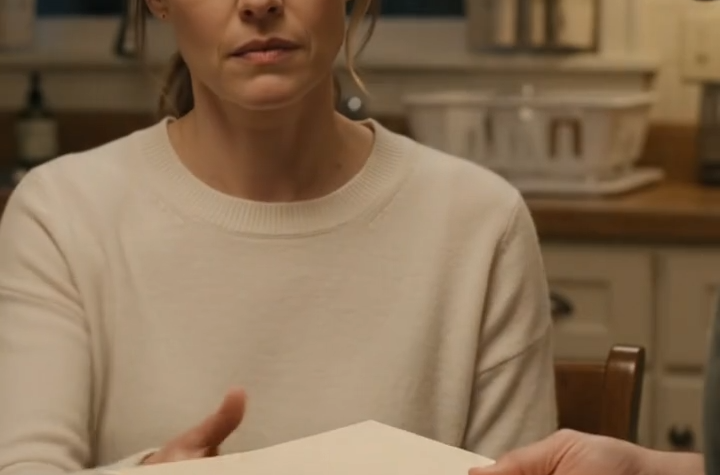
It was not a beautiful apology.
Jason was not suddenly a different man.
But it was more than I expected.
“Yes,” I said.
“You were.”
He nodded.
“I shouldn’t have talked to you like that.”
“No.”
Another silence.
Then he said, “Thank you for helping Emily.”
I looked at him.
“I helped my daughter.
You benefited from it.
There’s a difference.”
For once, he didn’t argue.
He just nodded.
Later that afternoon, Ben asked me to throw a baseball with him.
Emily sat on the porch watching us.
There were no grand declarations about family healing.
No dramatic promises that nothing bad would ever happen again.
Life rarely gives you endings that clean.
What I got instead was something better.
Boundaries.
Clarity.
My daughter began calling because she wanted to talk, not because she needed something signed.
I stopped believing that keeping peace required me to accept disrespect.
Jason learned that gratitude could not be replaced with entitlement forever.
And Emily learned that defending her marriage did not require humiliating everyone outside it.
The leather wallet from Father’s Day eventually came back to me.
Emily found it in a drawer and brought it over one afternoon.
“What should I do with this?”
I turned it over in my hand.
For a moment, I remembered Jason’s smirk, the silent backyard, and my grandson staring at his plate.
Then I handed it back.
“Give it to someone who needs one.”
She smiled faintly.
“You don’t want it?”
“No.”
Some objects become attached to a moment so completely that keeping them feels like carrying the moment around with you.
I didn’t need that one anymore.
The folder, however, stayed in my desk.
Not as a weapon.
Not as proof that I had won.
As a reminder.
Love should make you generous.
It should not make you careless with your dignity.
And sometimes the most important thing a father can do for his grown child is not rescue her immediately.
Sometimes it is to put the truth on the table, stay calm while everyone else panics, and let her finally see what has been standing in front of her all along.