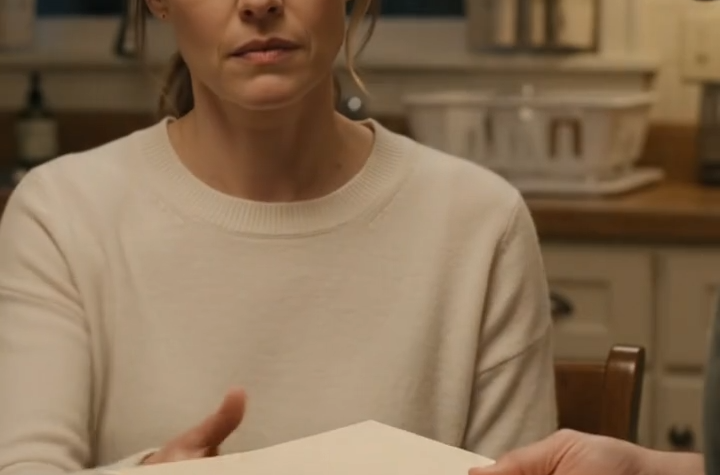
But she stopped describing my work for me.
The next time a relative asked what I did, she hesitated, looked at me, and said, “Amelia can tell you.”
It was a tiny sentence.
It mattered.
Months later, I was sitting in my apartment again, preparing for another long morning, when my phone buzzed on the nightstand.
This time it was early evening.
Mom.
For a second I remembered 2:07 a.m., the dark room, the warning, the command to make myself smaller so Daniel could look larger.
I answered.
She asked about my week.
Then, awkwardly, she asked about work.
Actually asked.
I told her a little.
Not everything.
Dignity did not require me to hand her every part of my life just because she had finally become curious.
But I gave her enough to begin again.
The leather folder from that dinner still sits on a shelf in my apartment.
There was nothing magical inside it.
No secret document.
No devastating evidence.
Just my work.
That was the point.
All those years, my family had treated my life like something dangerous that had to be hidden, softened, or translated so Daniel would never feel diminished beside it.
In the end, I did not defeat anyone with a speech.
I did not need to.
I sat at the table they had placed me at, followed every instruction they gave me, and let the truth become visible on its own.
For once, I did not make myself smaller to protect the story they preferred.
And when that story collapsed, I finally understood something I should have learned years earlier.
Their discomfort with who I was had never been proof that I was embarrassing.
It was only proof that silence had been convenient for them.
I stopped being convenient.